Which Hurtigruten Cruise is Right for You?
Which Hurtigruten Cruise Is Right For You?
You’ve decided you want to see the Norwegian coast. You’re considering Hurtigruten.
And now the difficult bit starts.
The Original Coastal Express, the North Cape Line, the Svalbard Line, the Arctic Line, the Arctic Circle Explorer and the Inner Fjords Explorer can all look surprisingly similar when you first start comparing them.
Some travel north, some south and some both ways. Some call at dozens of ports, while others spend much longer in fewer places. Some include drinks. Some do not. And the route names do not always tell you quite as much as you might expect.
You may also be wondering whether Hurtigruten is really for you.
Perhaps you have never been attracted to traditional cruising. You may picture formal evenings, crowded pool decks, casinos, theatre shows and thousands of people onboard.
Hurtigruten is very different from that.
I’m Mike Silford, Managing Director of Suitcase Travel. I have sailed the Original Coastal Express, while my daughter Penny has travelled on the Signature North Cape Line.
Between us, we have experienced both sides of Hurtigruten and helped more than 1,000 customers plan these holidays. So our advice comes not only from our own trips, but from years of hearing what customers loved, what surprised them and what they wished they had known before booking.
In this guide, I’ll explain how Hurtigruten works, the difference between Original and Signature, which routes I would consider for different kinds of traveller, the best times to go, what the Northern Lights are really like, which excursions are worth paying for and what life onboard is actually like.
By the end, you should have a much clearer idea of which Hurtigruten voyage is likely to suit you, and which ones you can probably rule out.
What’s in this guide?
This is a detailed guide, so you do not need to read it from beginning to end.
Use the links below to go straight to the section that is most useful to you.
- Why see the Norwegian coast with Hurtigruten?
- Understanding Hurtigruten: Original Coastal Express or Signature?
- Hurtigruten routes compared
Which Hurtigruten route should you choose?
- When should you travel?
- What are the Northern Lights actually like?
- Hurtigruten excursions: which are worth booking?
- What is life onboard Hurtigruten actually like?
- Let me help you choose the right Hurtigruten voyage
- FAQs
Why See the Norwegian coast with Hurtigruten?
Hurtigruten is not what most people picture when they hear the word “cruise”.
There are no formal nights, casinos or large theatre shows. You do not spend the day choosing between swimming pools, shops and organised entertainment.
The ship is not the main attraction. Norway is.
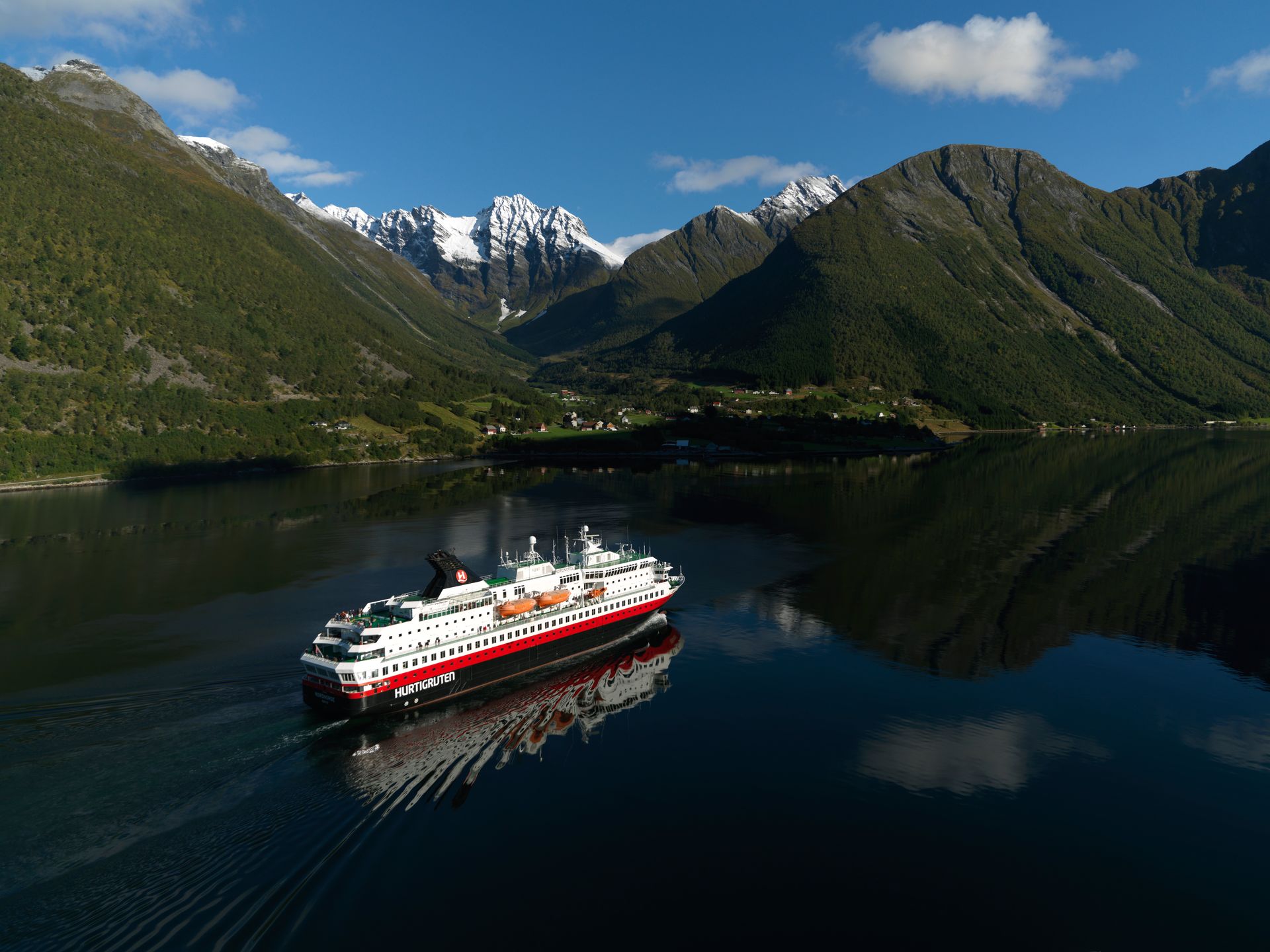
And you are not sharing all this with several thousand other passengers. Hurtigruten ships generally carry around 500 people, so they feel much smaller and quieter than the large cruise ships you may be picturing.
A Hurtigruten voyage is closer to a scenic train journey than a traditional cruise.
You sit comfortably while the view changes outside, stop to explore, then continue farther along the coast. The difference is that your room, restaurant and luggage travel with you.
The ships stay close to the coastline, sailing past islands, fishing villages, waterfalls and mountains. They also stop in smaller communities that many traditional cruise ships do not visit.
That means the time between ports does not feel like dead time. The sailing is part of the sightseeing.
Both Penny and I took books on our voyages, expecting plenty of free time to catch up on our reading. Neither of us got very far. The view kept changing, and we found ourselves watching the coast instead.
It is also a simple way to cover a long stretch of Norway. You unpack once, then wake up somewhere new without having to keep changing hotels or spend hours driving between places.
You still spend plenty of time onboard, so it will not suit everyone. But if the parts of cruising you dislike are formal evenings, crowds and organised entertainment, Hurtigruten is a very different kind of holiday.
Understanding Hurtigruten: Original vs Signature
Before We Compare Routes, Let's Compare Experiences
The biggest mistake people make when planning a Hurtigruten holiday is focusing too much on individual ports.
That's understandable. Most cruises are sold on destinations.
With Hurtigruten, particularly the Original Coastal Express, the experience is often much bigger than any individual stop.
The ports matter. But the journey is usually what people remember most.
The Original Coastal Express
The Original Coastal Express is Hurtigruten’s historic route.
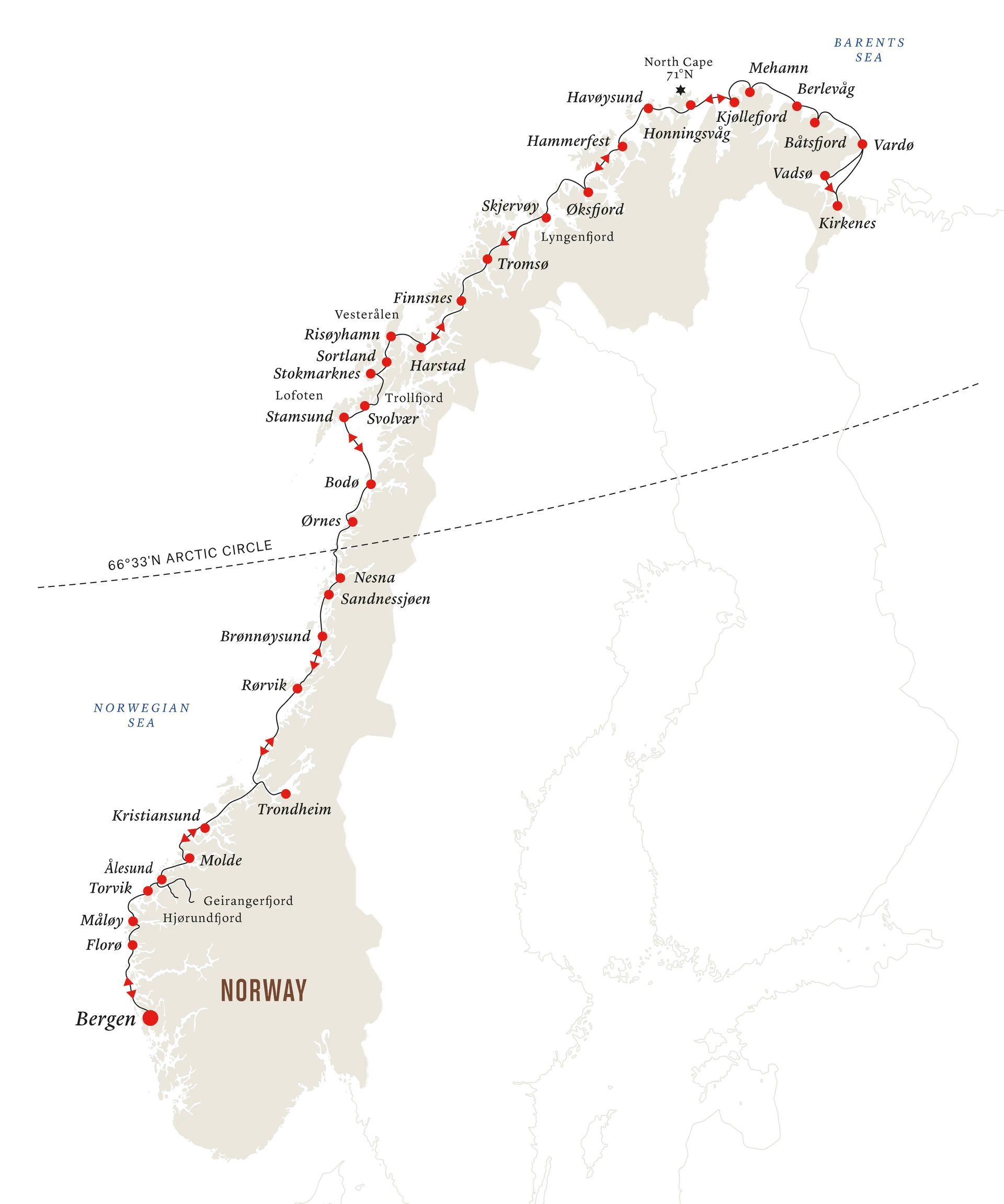
It is one route between Bergen and Kirkenes, although you can travel it in three different ways: as the full round trip, northbound from Bergen to Kirkenes, or southbound from Kirkenes to Bergen.
Whichever option you choose, you are travelling on the same working coastal service that has connected communities along the Norwegian coast since 1893.
That is one of the most important things to understand about it. This is part cruise and part working ferry service. You may be travelling the coast for a week or more, while the Norwegian sitting beside you is simply using the ship to get from one town to the next.
At the same time, the ship is carrying cars, freight and supplies between coastal communities.
That working role is not simply something happening in the background.
It is part of the experience.
The ship calls at 34 ports on the full round trip. Some stops last only a few minutes. Others provide enough time for sightseeing or excursions.
At the shorter stops, you may not even leave the ship. You watch local passengers get on and off, cars and goods being loaded or unloaded, then the ship continues along the coast.
So you are travelling as a holidaymaker, but alongside people who are using the ship as part of everyday life in Norway.
If one of the things you value when you travel is meeting local people rather than spending the whole holiday surrounded by other tourists, that is a real advantage. You are not guaranteed long conversations with Norwegians at every stop, of course, but you are sharing the ship with people who actually live along the coast.
On my voyage, I got chatting to a member of the crew while we were on deck. He pointed out the village we had just passed and told me what it had been like growing up there.
It was only a 20-minute conversation, but it gave me an insight into life along the coast that I would never have got from an organised excursion.
That is one part of what makes the Original Coastal Express special.
The other is what is happening outside the window almost constantly.
The scenery keeps changing: islands, fishing villages, fjords, mountains and Arctic landscapes.
You are not waiting for the next port for something interesting to happen. The journey itself is part of what you have come to experience.
At the same time, you are travelling through communities that are still using the ship as part of everyday life.
So the appeal is not just the places you stop. It is the combination of the ever-changing coast and the feeling that you are travelling through a living part of Norway rather than simply visiting a series of tourist sights.
The journey itself becomes the attraction.

Signature Voyages
Signature works differently.
Rather than one coastal route with different journey lengths, Signature is a collection of separate Hurtigruten itineraries.
These currently include the North Cape Line, Svalbard Line, Arctic Line, Arctic Circle Explorer and Inner Fjords Explorer. Each follows a different route and is designed around a different part of Norway or type of holiday.
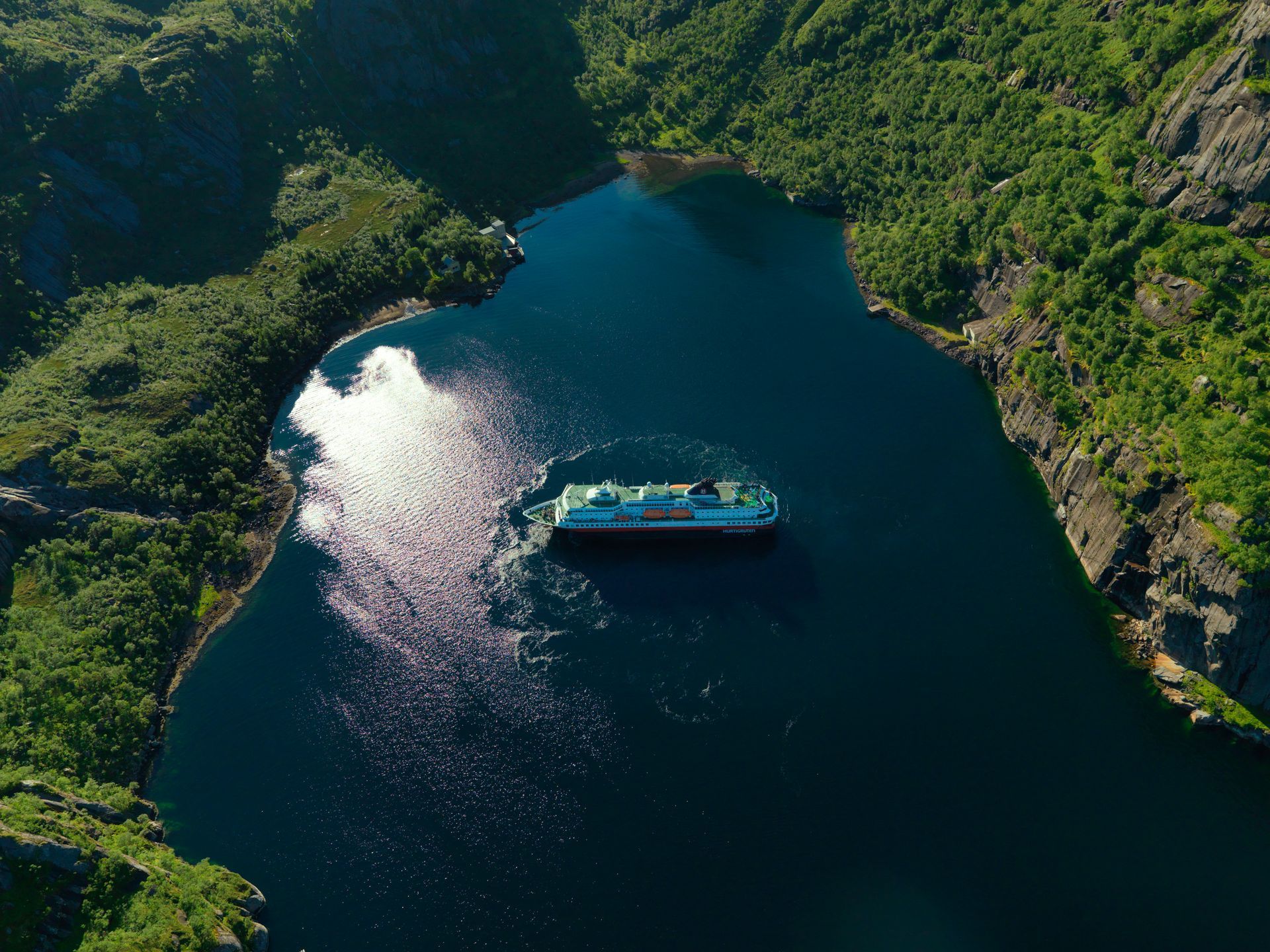
What they have in common is the Signature approach: fewer ports, longer stays, more time ashore, more inclusions and a more leisurely pace.
Rather than trying to show you as much of Norway as possible, Signature focuses on a smaller number of selected destinations.
You are more likely to have time for an excursion and still be able to explore independently afterwards.
That can sometimes be difficult on the Original Coastal Express.
Everyone onboard is there for the holiday. You are not sharing the ship with local passengers using it to travel between towns, and the ship is not carrying freight as part of a working coastal service.
Signature is still unmistakably Hurtigruten.
It is not a traditional large-ship cruise. You will not find theatre shows, casinos or a packed programme of entertainment. Norway remains the focus.
But it is closer to a traditional cruise experience than the Original Coastal Express.
Destinations become a much larger part of the holiday.
Signature is also usually more expensive per day. That partly reflects the included drinks, extra restaurant choice and the fact that the ships and itineraries are designed around people spending longer onboard.
For some people, those differences are worth paying for. For others, the Original Coastal Express remains the more compelling option.
Original vs Signature at a Glance
| Original Coastal Express | Signature Voyages | |
|---|---|---|
| How the routes work | One historic coastal route, available as a full round trip, northbound or southbound | Several different itineraries to choose from |
| What it is | A working coastal service used by local people as well as holidaymakers | Holiday cruises focusing on selected destinations |
| Main focus | The journey itself | Spending longer in destinations |
| Ports | 34 ports on the full round trip | Fewer selected ports |
| Time ashore | Short and long stops depending on the port | Generally longer stays |
| What you experience | Everyday life along the Norwegian coast | More time exploring individual destinations |
| Atmosphere | Traditional and closely connected to coastal Norway | More relaxed and cruise-like |
| Food and drink | Meals included, drinks generally extra | Meals and a wide selection of drinks included |
| Excursions | Extra cost | Extra cost |
| Passengers | Holidaymakers and local passengers | Mainly holidaymakers |
| Price | Usually considerably cheaper overall and per day | Usually more expensive per day, with more included |
| Best for | Travellers wanting the classic Hurtigruten experience and the widest view of the coast | Travellers wanting longer stays, more inclusions or a route focused on particular parts of Norway |
| My view | The voyage that best captures what makes Hurtigruten unique | Excellent, but a different experience rather than a better one |
Which Hurtigruten Voyage Is Most Popular?
One question we're asked regularly is:
"Which Hurtigruten route do most people actually choose?"
For our customers, the answer is still the Original Coastal Express.
In fact, the 12-day roundtrip between Bergen and Kirkenes remains our most popular Hurtigruten holiday.
Many customers feel this may be their only opportunity to experience Hurtigruten and want to see the entire coast rather than only one half of the journey.
The return voyage doesn't simply repeat what you've already seen.
Different places appear during daylight, the scenery looks completely different travelling in the opposite direction and you gain a much fuller understanding of Norway's coastline.
Our second most popular choice is the 7-day northbound voyage from Bergen to Kirkenes.
This works particularly well when combined with one of Norway's classic rail journeys.
Many travellers begin in Oslo, travel on the spectacular Oslo to Bergen Railway, often including an overnight stay in Flåm and a journey on the famous Flåm Railway, before joining Hurtigruten in Bergen.
That combination creates one of the finest Norway holidays available, combining the country's best rail and coastal experiences.
The North Cape Line is our most popular Signature voyage, particularly for travellers wanting longer port stays, a more inclusive onboard experience and winter travel.
Hurtigruten Routes Compared
| Route | Best For | My Verdict |
|---|---|---|
| Original Coastal Express Roundtrip (12 Days) | Seeing the full Norwegian coast and experiencing Hurtigruten at its most complete | Our most popular Hurtigruten voyage and my first recommendation if time allows. |
| Original Coastal Express Northbound (7 Days) | A shorter first Hurtigruten experience and combining with Oslo, Bergen and the Flåm Railway | The best shorter introduction to Hurtigruten. |
| Original Coastal Express Southbound (6 Days) | Lofoten, Vesterålen and some of Norway's most beautiful coastal scenery | Excellent, but usually not my first recommendation for a first trip. |
| North Cape Line | Winter travel, Northern Lights and longer port stays | The strongest Signature itinerary for most travellers. |
| Svalbard Line | Summer travel and the Midnight Sun | A Norwegian coastal voyage with a taste of Svalbard rather than a full Svalbard expedition. |
| Arctic Line | Combining Copenhagen with Arctic Norway | Ideal when Copenhagen is part of the holiday rather than simply a departure point. |
| Arctic Circle Explorer | Shorter Arctic Norway holidays and winter experiences | One of the best shorter Signature routes. |
| Inner Fjords Explorer | Norway's western fjords | The clear choice when fjords are your main priority. |
The Original Coastal Express Routes
The Original Coastal Express follows one historic route between Bergen and Kirkenes, but you can experience it in three different ways:
- the full 12-day round trip
- the seven-day northbound journey from Bergen to Kirkenes
- the six-day southbound journey from Kirkenes to Bergen
For many first-time Hurtigruten customers, the Original Coastal Express is where I would start.
It remains our most popular way to travel with Hurtigruten and, for me, it is still the experience that best captures what makes the Norwegian Coastal Route special.
The main question is then which version of it suits you best.
The 12-Day Roundtrip
If this may be your only Hurtigruten voyage, the full round trip remains my favourite option.
The route follows the entire coast from Bergen to Kirkenes and back again.
Some people worry that the return journey will feel like repeating the first half.
In practice, it does not.
The timetable is different in each direction. Some places passed in darkness northbound appear in daylight southbound. The scenery changes when viewed from the opposite direction, and different parts of the coast become the focus.
You are not simply repeating the journey. You are experiencing two sides of it.
For that reason, the full round trip remains the choice most of our customers make.
See the full Original Coastal Express 12-day Roundtrip itinerary.
The 7-Day Northbound Voyage
If you do not have time for the full 12-day round trip, the seven-day northbound Coastal Express is the shorter option I normally recommend for a first Hurtigruten journey.
It begins in Bergen and gives you the broadest mix of what makes the route special.
You start with western Norway and its fjords, then visit Ålesund, a colourful Art Nouveau town surrounded by islands and historic Trondheim before sailing through smaller fishing communities and crossing the Arctic Circle.
From there, the scenery becomes more dramatic as you reach Lofoten, with its steep mountains, fishing villages and narrow channels, Tromsø, the main city of Arctic Norway, and the far north, ending in Kirkenes close to the Russian border.
It also gives you that sense of travelling steadily north. The landscape, daylight and settlements change as you move from the greener south into Arctic Norway.
You do miss some of the best southbound daylight sailing through Lofoten and the Helgeland coast. But as a first shortened voyage, the northbound route gives you more variety.
See the full Original Coastal Express 7-day Northbound itinerary.
My advice: choose the seven-day northbound journey when you want the strongest introduction to Hurtigruten but do not have time for the full round trip.
It also combines particularly well with a rail journey before the cruise, travelling from Oslo to Bergen and potentially adding an overnight in Flåm and a trip on the Flåm Railway.
See the Coastal Voyage with Flam Railway and Oslo itinerary.
The 6-Day Southbound Voyage
The southbound journey begins in Kirkenes and ends in Bergen.
Its main strength is the scenery.
You travel through Lofoten, with its steep mountains and fishing villages, and Vesterålen, a quieter island group immediately to the north, with the possibility of entering Trollfjord, a narrow fjord surrounded by high rock walls, when conditions allow.
You then continue along the Helgeland coast, one of the most scenic stretches of the route, past the Seven Sisters, Torghatten and the many islands and fishing communities.
It is an excellent route for people whose priorities are Lofoten, dramatic coastal scenery and the more natural, less city-focused parts of the journey.
The trade-off is that it gives you fewer longer daytime calls than the northbound route. Tromsø is visited close to midnight on the standard timetable, and you do not get the same gradual introduction through Bergen, the western fjords and the larger towns.
See the full Original Coastal Express 6-day Southbound itinerary.
My advice: choose the southbound journey if Lofoten and coastal scenery matter more to you than having the broadest first introduction to Norway. I would not normally choose it for a first Hurtigruten trip unless those priorities, your dates, or plans to spend extra time in Tromsø or Kirkenes make it the better fit.
Hurtigruten Signature Voyages
The North Cape Line
The North Cape Line is Signature cruise with longer port stays, included drinks and more time to explore. It operates in the winter months.
There are three different journeys to choose:
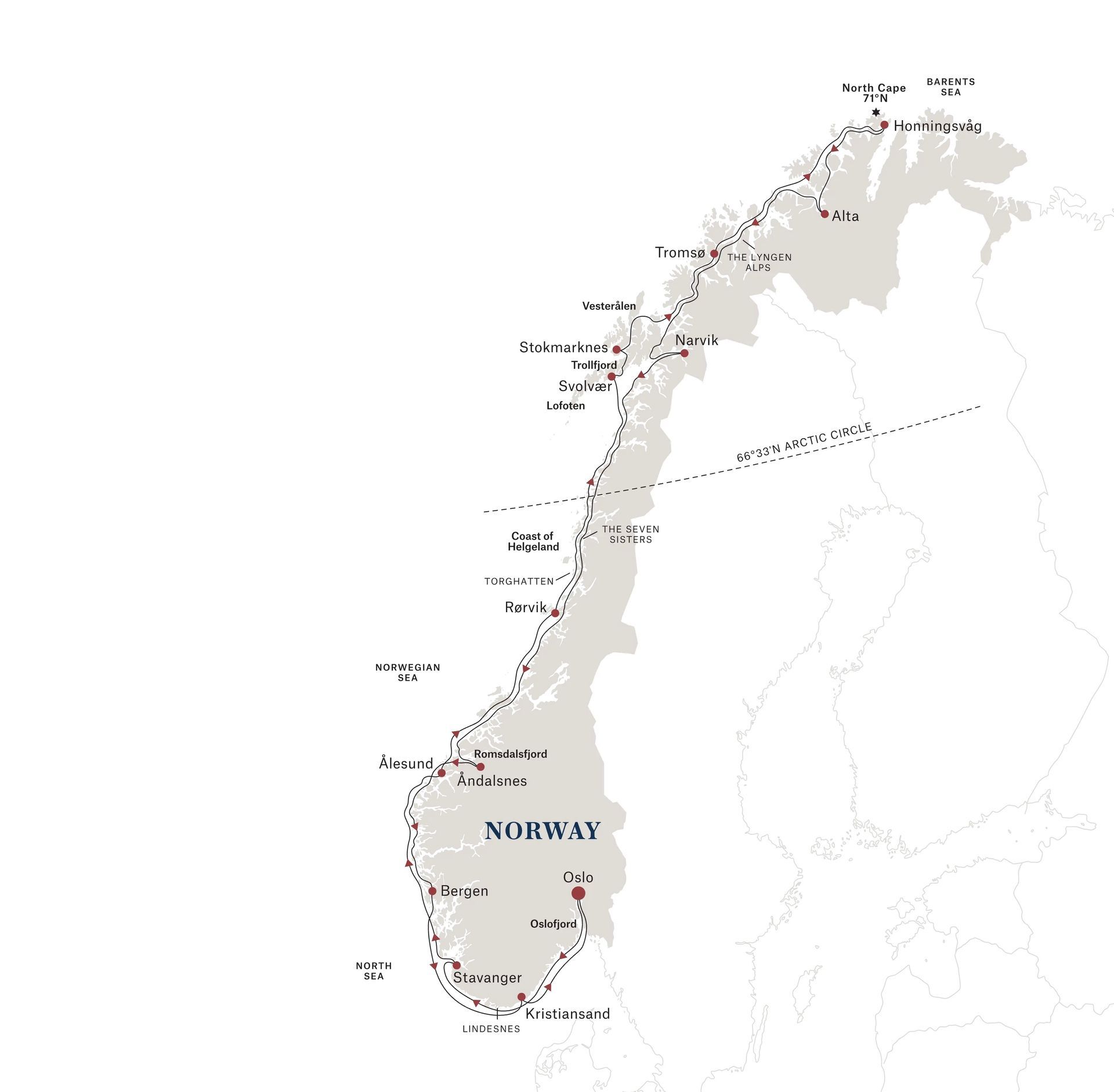
· The 15-day round trip from Oslo
· The 7-day northbound journey from Oslo to Tromsø
· The 9 -day southbound journey from Tromsø to Oslo
The important point is that the northbound option does not reach the North Cape. Despite the route name, it finishes in Tromsø.
The 15-day round trip
The full journey begins and ends in Oslo.
Travelling north, it visits Stavanger, a lively harbour city and gateway to Lysefjord and Pulpit Rock, then Ålesund, with its distinctive Art Nouveau centre, before calling at Rørvik, a small coastal town that gives you a glimpse of everyday life along the Norwegian coast.
From there, it continues to Svolvær in Lofoten, with its dramatic mountains and fishing villages, and Tromsø, the main city of Arctic Norway.
It then reaches Honningsvåg for the North Cape, the high plateau above the Barents Sea, before turning south through Alta, one of the best stops for winter activities such as husky sledding.
The southbound leg also includes Narvik, known for its dramatic Second World War history and the Battles of Narvik, and Åndalsnes, surrounded by some of Norway’s most dramatic fjord and alpine scenery.
You then continue to Bergen, the historic gateway to the western fjords, before finishing via Kristiansand, known for its white wooden houses, relaxed seaside atmosphere and beaches.
This is the most complete version of the North Cape Line.
You get western Norway, Lofoten, Tromsø, a full day in Honningsvåg, winter activities in Alta and a long stretch of the inner coastal route on the way south.
The ship stays for around eight hours in Tromsø, while the full day in Honningsvåg gives you time for the North Cape excursion. Alta brings opportunities such as husky sledding, the Igloo Hotel and the Northern Lights Cathedral.
The trade-off is the length of the trip and the time spent onboard. There is a sea day near the beginning and another full day of scenic sailing between Narvik and Åndalsnes.
See the full Signature North Cape Line 15-day Roundtrip itinerary.
My advice: choose the round trip if you want the broadest Signature experience of winter Norway, with the North Cape, Lofoten, Tromsø and Alta all included.
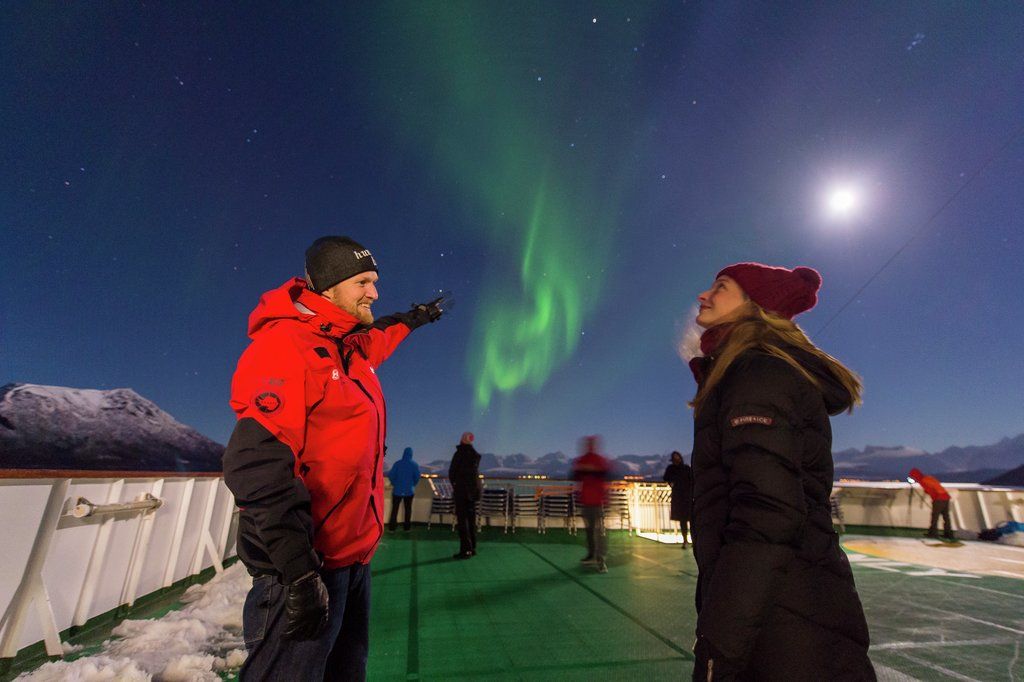
The Northern Lights, Norway.
The 7-day northbound journey
The northbound route travels from Oslo to Tromsø.
It includes a sea day followed by Stavanger, Ålesund, Rørvik, Svolvær and Stokmarknes, the birthplace of Hurtigruten and home to the Hurtigruten Museum, before finishing in Tromsø.
You see Lysefjord in western Norway, cross the Arctic Circle and spend time in Lofoten.
What you do not get is Alta, Honningsvåg or the North Cape.
That makes this a very different proposition from the round trip. It is more accurately a journey from southern Norway into the Arctic, rather than a North Cape cruise.
Its main strength is the gradual change as you travel north. You begin in Oslo, see western Norway and Lofoten, then finish in Tromsø, where you can add extra nights for winter activities or Northern Lights excursions.
My advice: choose the northbound route if you have about a week and want a mix of western Norway, Lofoten and Tromsø. Do not choose it if reaching the North Cape itself is important, because this version does not go there.
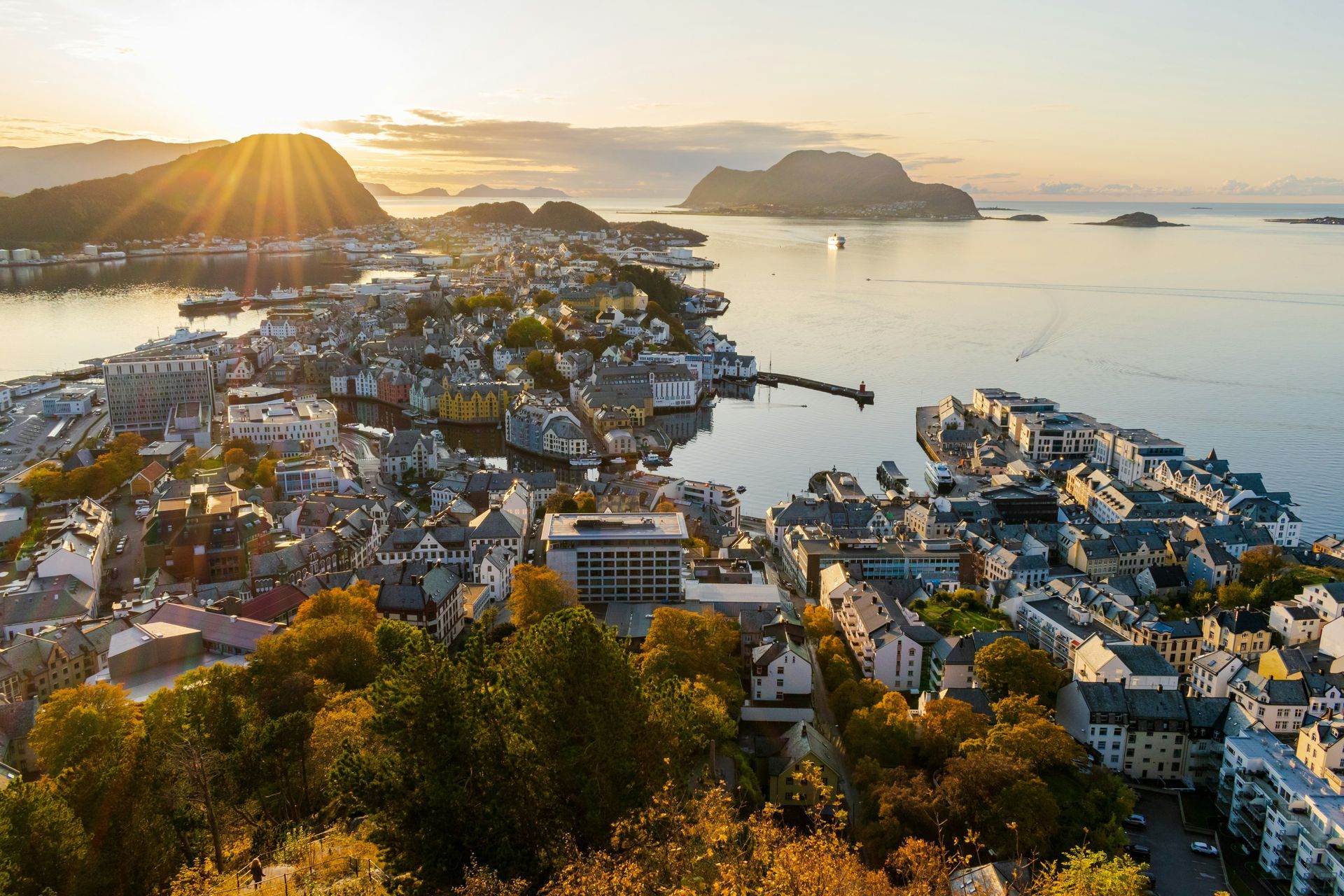
Ålesund, western Norway.
The nine-day southbound journey
The southbound route starts in Tromsø and finishes in Oslo.
Unlike the northbound option, it does visit Honningsvåg and the North Cape. It then continues through Alta, Narvik, the inner coastal route, Åndalsnes, Bergen and Kristiansand.
This gives you a much stronger Arctic start.
You have a full day in Honningsvåg, followed by Alta and Narvik, before heading south through fjords and islands towards Bergen and Oslo.
However, it does not include Svolvær or the dedicated Lofoten day found on the northbound and round-trip itineraries. It also misses Stavanger and Ålesund.
My advice: choose the southbound route if the North Cape, Alta and winter Arctic experiences matter more than Lofoten. Spend extra time in Tromsø before boarding, because the ship leaves in the evening and the itinerary itself gives you no full sightseeing day there.

Norway.
The Svalbard Line
The name makes this sound like a Svalbard cruise.
In reality, it is mainly a Norwegian coastal cruise with a relatively short visit to Svalbard.
That is the most important thing to understand before booking it, because some people choose it expecting Svalbard to be the main event and are disappointed when they realise how much of the voyage is actually spent along the Norwegian coast.
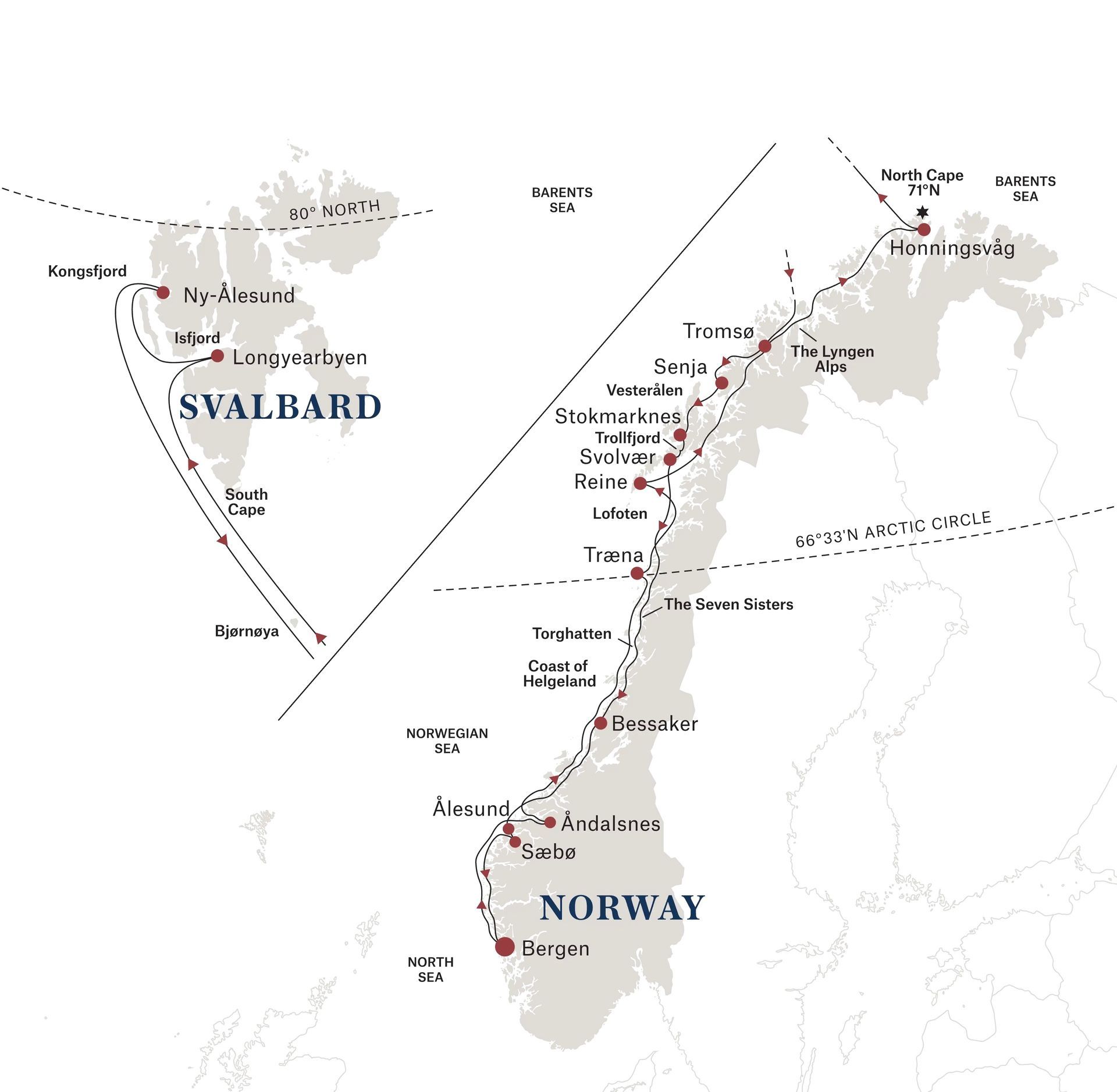
The full Signature voyage begins and ends in Bergen and operates during the lighter summer months.
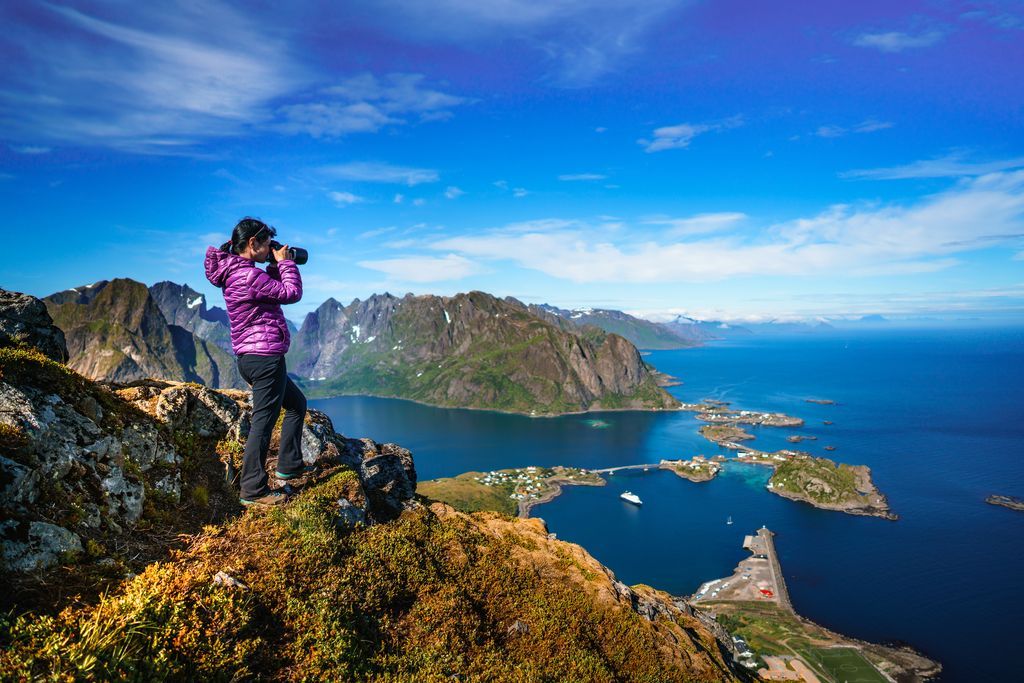
It travels through Åndalsnes, with its dramatic mountain and fjord scenery, Træna, a remote island community off the Helgeland coast, and Reine in Lofoten, one of the most photographed fishing villages in Norway, before continuing to Tromsø and Honningsvåg.
From there, the ship crosses the Barents Sea to Svalbard.
The route gives you the Midnight Sun, long daylight hours, Lofoten, the North Cape area and then a very different landscape when you reach the High Arctic.
In Svalbard, Longyearbyen is the main settlement and the place where most visitors get their first real sense of the archipelago. Depending on the direction and itinerary, the voyage may also include Ny-Ålesund, a tiny international research community beside Kongsfjord and its glaciers.
You may see seabirds, Svalbard reindeer, Arctic foxes, walrus or whales. A polar bear sighting is possible, but it would be extremely lucky and should not be expected.
See the full Signature Svalbard Line 15-day Roundtrip itinerary.
My advice: choose the Svalbard Line if you want a summer Signature voyage along the Norwegian coast with a taste of Svalbard at the end. Do not choose it if Svalbard itself is the main reason you are travelling. For wildlife, repeated landings and a proper exploration of the archipelago, I would look at a dedicated expedition cruise instead.
Northbound, southbound or round trip?
The northbound voyage starts in Bergen and travels up the Norwegian coast before ending in Longyearbyen.
It includes places such as Åndalsnes, Træna, Reine, Tromsø and Honningsvåg, followed by a sea day crossing the Barents Sea.
The southbound version starts in Longyearbyen. It may include Ny-Ålesund before crossing back to mainland Norway and continuing through Senja, a large Arctic island known for its dramatic mountains, fjords and fishing villages, Stokmarknes, Lofoten and the Helgeland coast, with its thousands of islands, small communities and distinctive mountain scenery.
The full round trip combines both directions and gives you the broadest version, but the amount of time spent exploring Svalbard remains limited compared with a dedicated expedition.
My advice: choose the Svalbard Line if you want a summer Signature voyage along the Norwegian coast with a short taste of Svalbard at the end. Do not choose it if Svalbard itself is the main reason you are travelling. For wildlife, repeated landings and a proper exploration of the archipelago, I would recommend a dedicated expedition cruise instead.
The Arctic Line
The Arctic Line is a winter Signature cruise between Copenhagen and Tromsø.
Unlike the Original Coastal Express, it does not follow the full historic coastal route. Instead, it visits a smaller number of selected destinations, with longer stays and more time onboard.
It is best suited to people who want Lofoten, Alta and the North Cape, and who are comfortable with a full day at sea crossing the North Sea.
If the western fjords or the working Coastal Express experience are your main priorities, this is probably not the right route.
The 12-day northbound journey
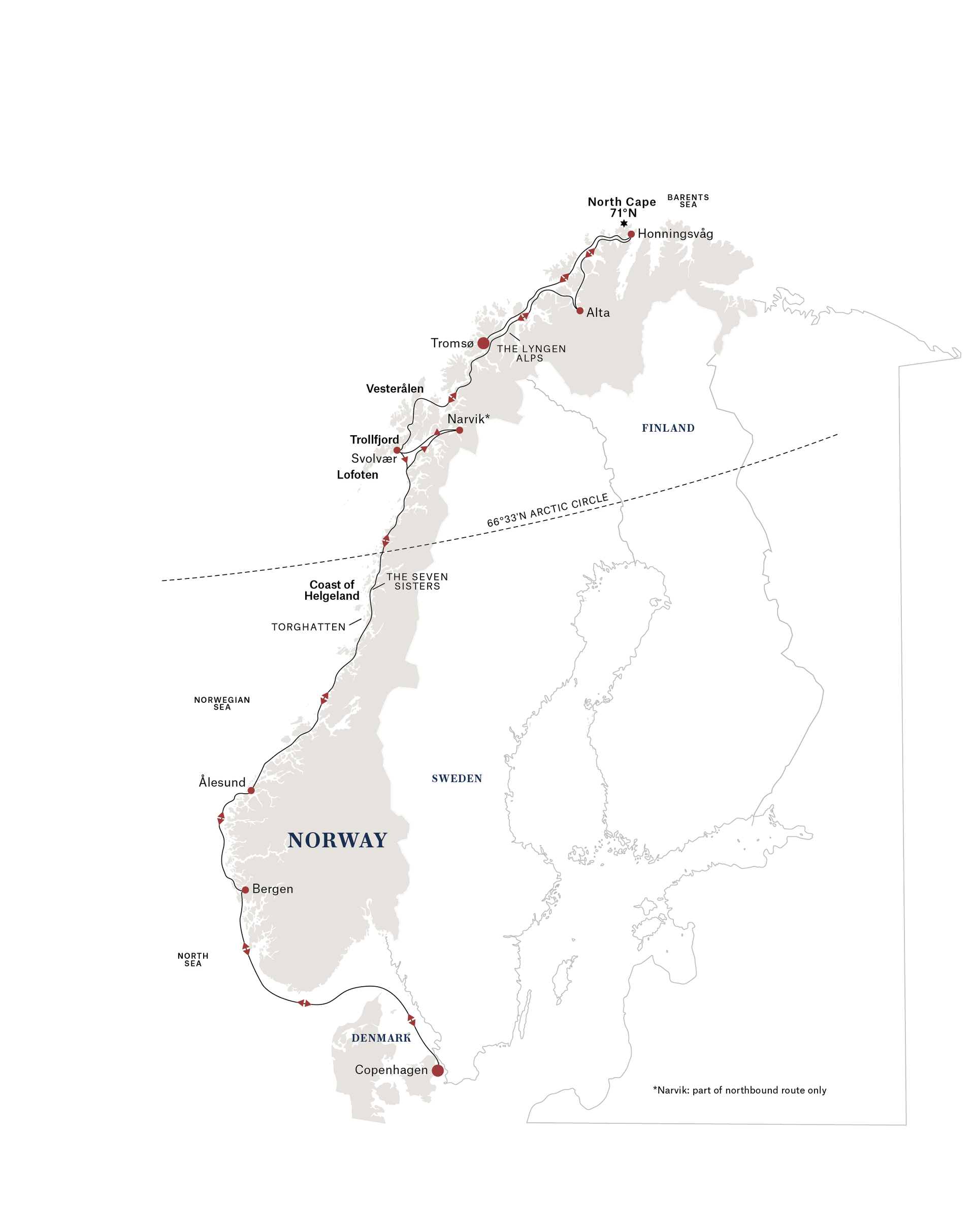
The northbound route starts in Copenhagen and finishes in Tromsø.
After a full day crossing the North Sea, it visits Bergen and Ålesund before continuing north through Norway. It then calls at Narvik, Svolvær in Lofoten, Alta and Honningsvåg before finishing in Tromsø.
Alta is one of the strongest parts of the itinerary because the ship stays overnight, giving you time for winter activities such as husky sledding, snowshoeing or a visit to the Igloo Hotel.
Honningsvåg gives you access to the North Cape, while Svolvær gives you time in Lofoten.
This direction also gives you a stronger sense of progression, starting in Copenhagen, moving through western Norway and then steadily into the Arctic.
My advice: choose the northbound route if you want the broadest version of the Arctic Line, particularly if Narvik and its Second World War history matter to you, or you like the idea of travelling gradually from Denmark into Arctic Norway.
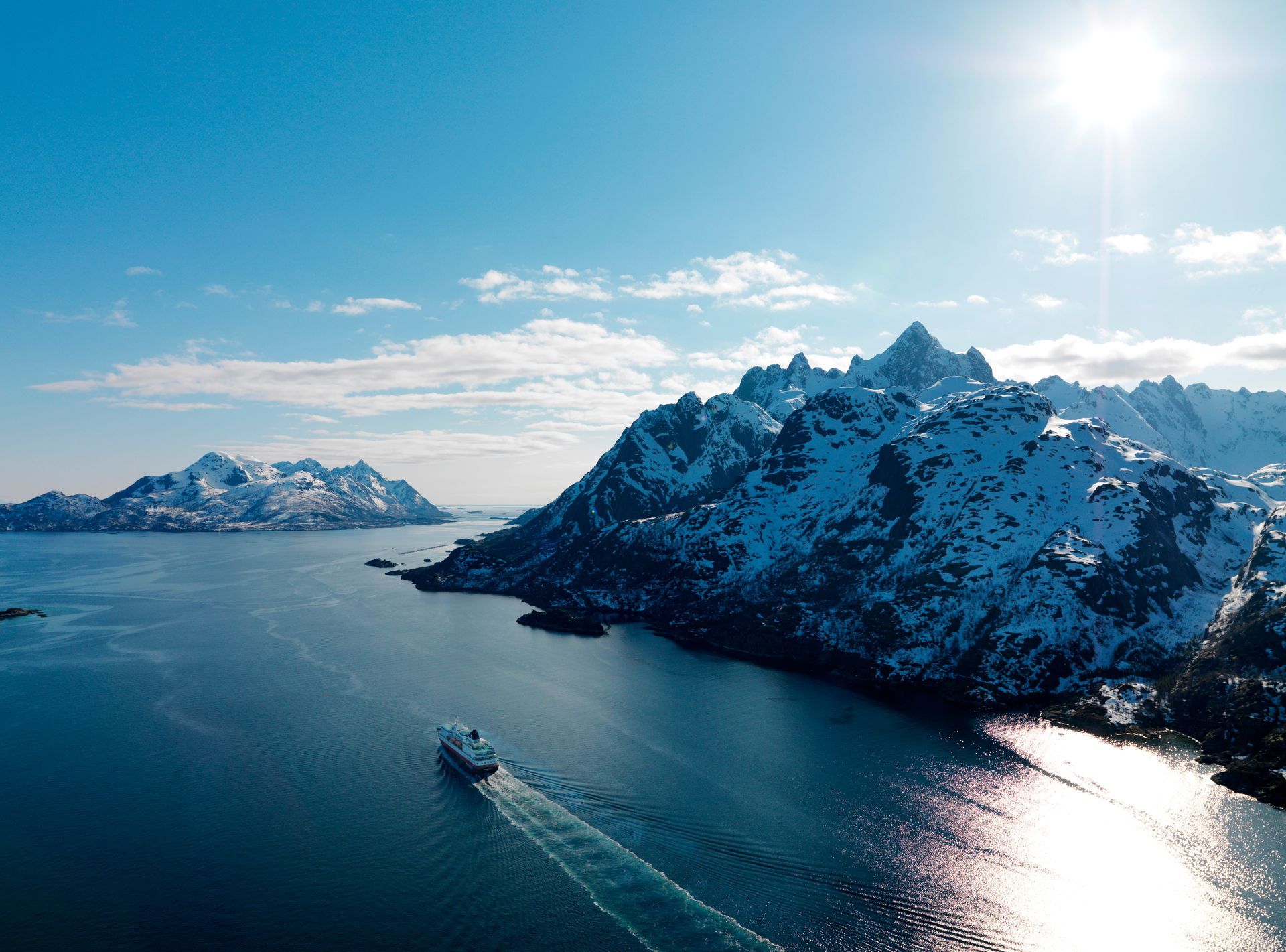
The 11-day southbound journey
The southbound route starts in Tromsø and finishes in Copenhagen.
The ship stays overnight in Tromsø, giving you the evening and following morning to explore before sailing.
From there, it visits Honningsvåg for the North Cape, spends time in Alta, then continues through Svolvær in Lofoten, Ålesund and Bergen before the full North Sea crossing to Copenhagen.
Like the northbound route, it gives you longer port stays, included drinks and more restaurant choice than the Original Coastal Express.
What you do not get is Narvik, and the journey has less of that gradual feeling of travelling from southern Norway into the Arctic because you are doing it in reverse.
My advice: choose the southbound route if you want to start the holiday in the Arctic, have more usable time in Tromsø before sailing, and finish in Copenhagen. It is also the better fit if that direction works more naturally with the rest of your holiday.
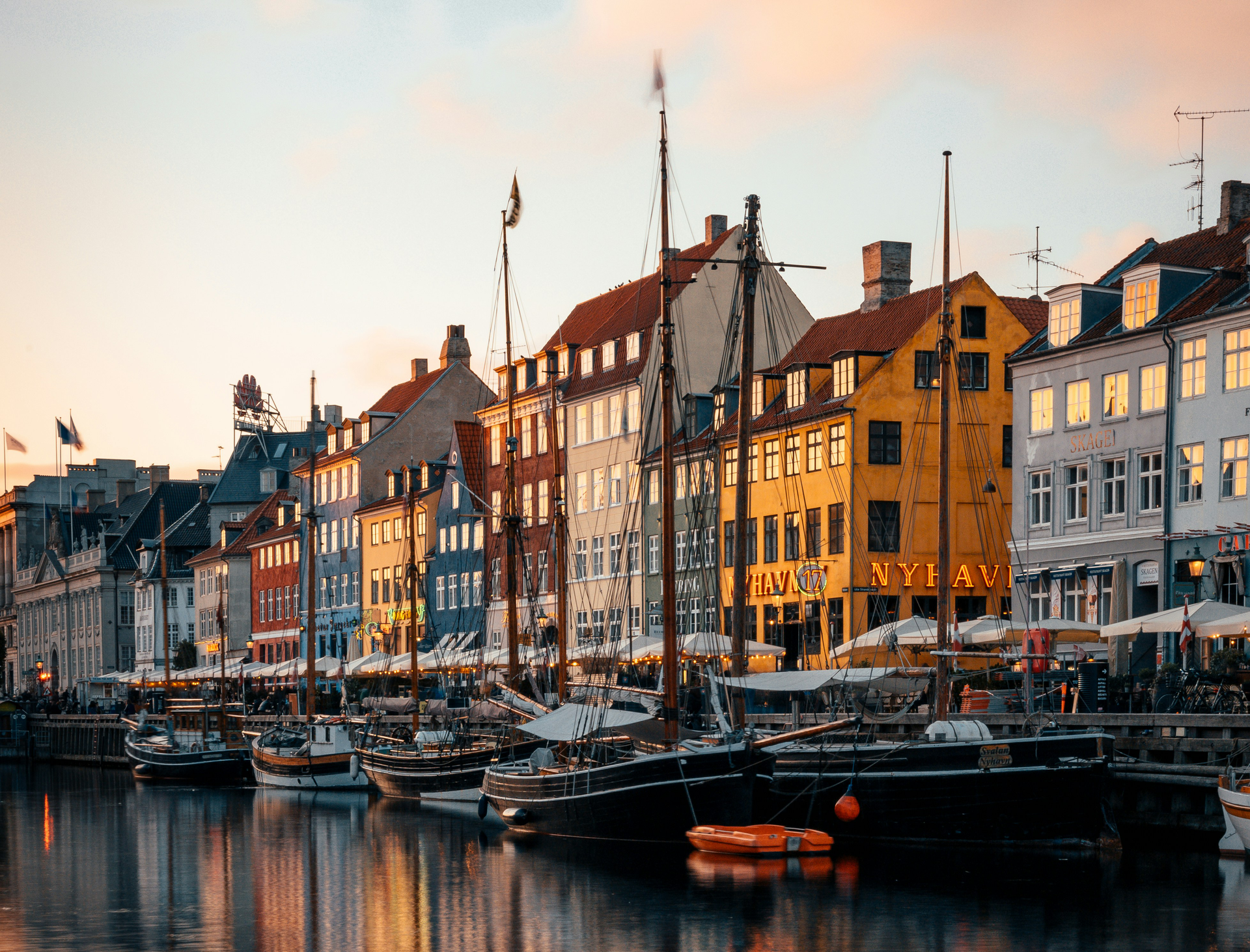
Copenhagen, Denmark.
The Arctic Circle Explorer
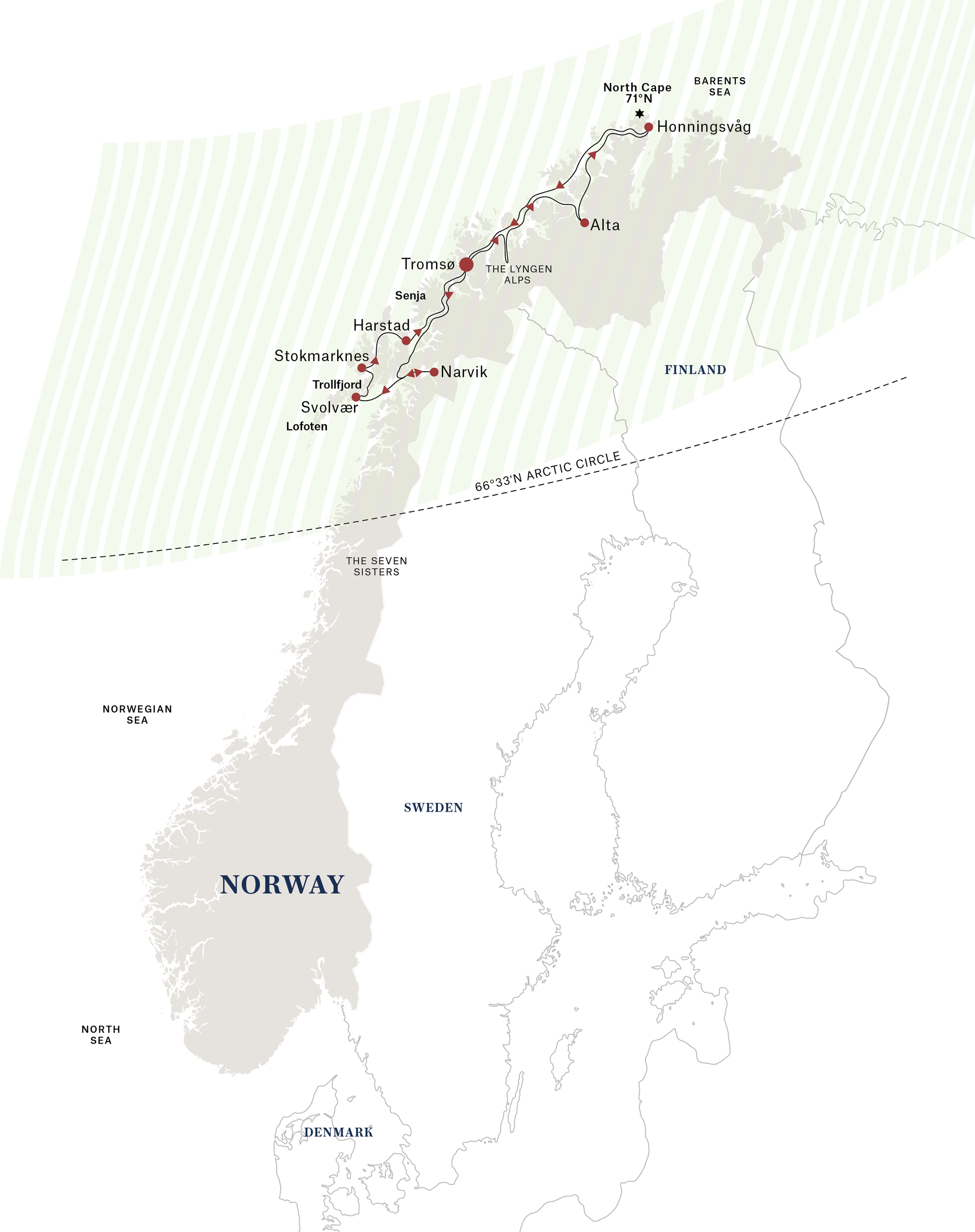
The Arctic Circle Explorer is a shorter winter Signature voyage focused entirely on Arctic Norway.
It is an eight-day round trip from Tromsø, so you do not spend several days travelling north from Bergen, Oslo or Copenhagen. Instead, you reach the Arctic highlights quickly.
The route visits Narvik, Svolvær in Lofoten, Harstad, a small Arctic town in the Vesterålen region, Alta and Honningsvåg before returning to Tromsø. It also sails through Lofoten and Vesterålen, including Raftsundet, a narrow scenic strait between steep mountains, and Stokmarknes.
Alta is one of the strongest parts of the itinerary because the ship stays overnight.
You arrive on the evening of day five and have most of the following day for winter activities such as husky sledding, snowmobiling, whale watching, visiting the Northern Lights Cathedral or staying at the Igloo Hotel.
From Honningsvåg, you can take the excursion to the North Cape.
Because the whole voyage stays in or around Arctic Norway, you also have repeated opportunities to see the Northern Lights, although they can never be guaranteed.
The trade-off is that you are concentrating entirely on the north. You do not see Bergen, Trondheim or the western fjords, and you miss the gradual change from southern Norway into the Arctic that is part of the appeal of the Original Coastal Express.
I would also add at least one extra night in Tromsø if possible. The ship leaves on the first evening and returns on the morning of the final day, so the voyage itself gives you very little time to explore the city.
My advice: choose the Arctic Circle Explorer if you have about a week and already know that Lofoten, Alta, the North Cape, winter activities and Arctic Norway are your priorities. It is a very focused Arctic trip rather than a broad introduction to Norway, so I would not normally choose it for a first visit if you want to see more of the country.
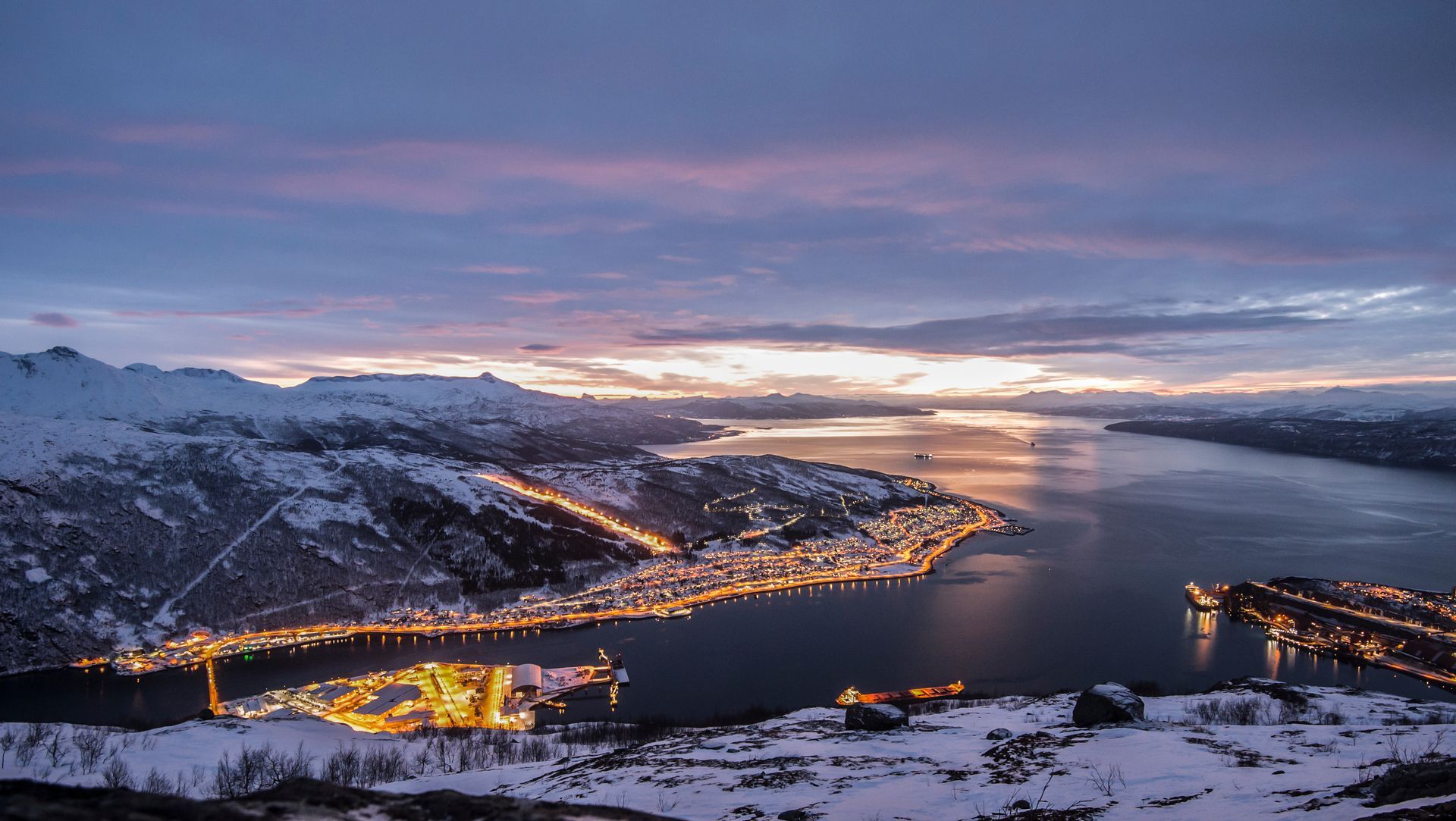
Narvik, Northern Norway
The Inner Fjords Explorer
The Inner Fjords Explorer is an eight-day Signature voyage from Bergen focused entirely on the fjords of western Norway.
This is not a shorter version of the Original Coastal Express. It is a very different kind of trip, designed around spending more time deep inside the fjords rather than travelling the full Norwegian coast.
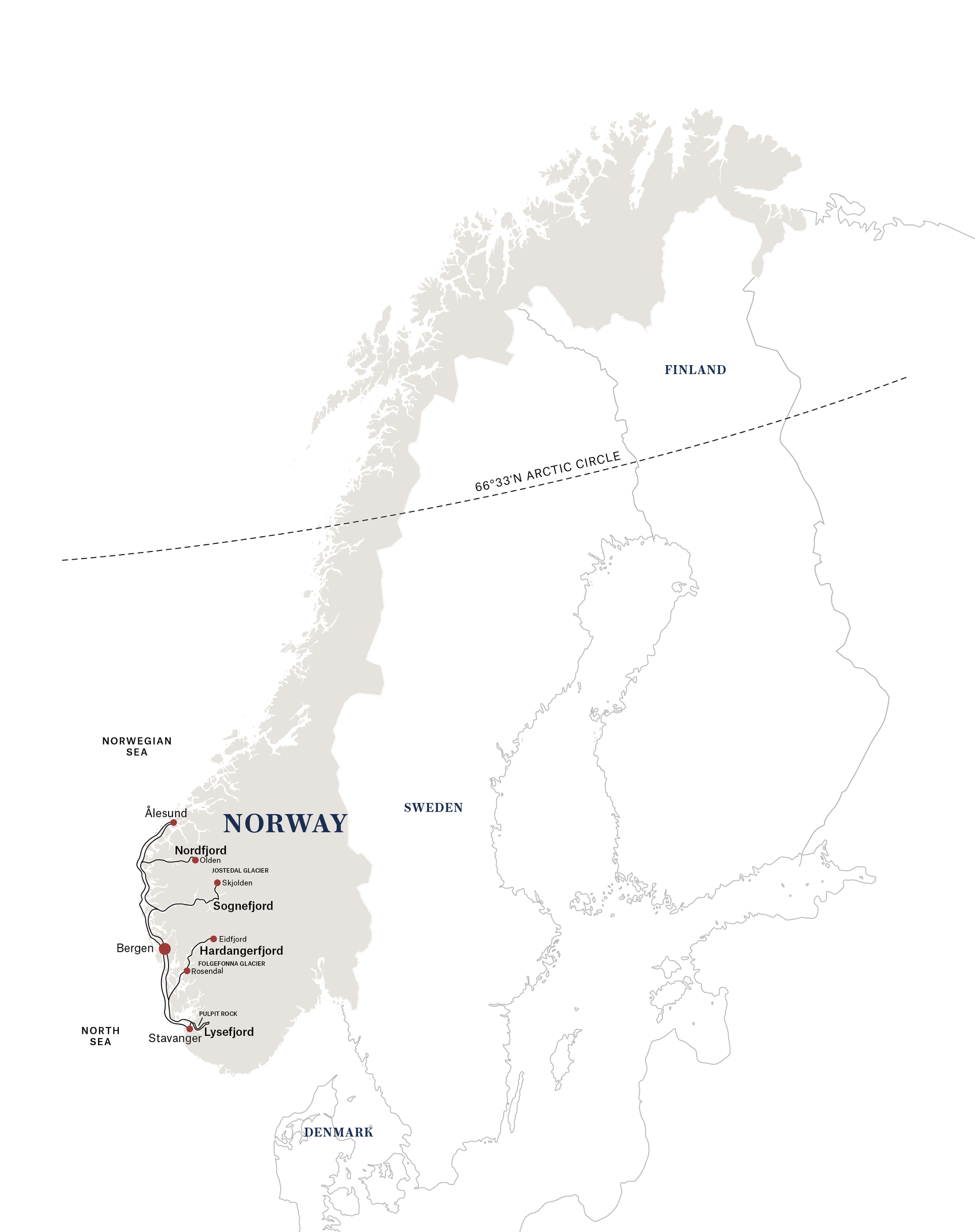
The itinerary includes Rosendal, a small village on a branch of Hardangerfjord, Lysefjord and Stavanger, Eidfjord at the head of Hardangerfjord, Skjolden deep inside Sognefjord, Ålesund, then Olden on Nordfjord, close to some of western Norway’s best-known glacier scenery, before returning to Bergen.
That gives you much more time among the steep mountains, waterfalls, orchards, villages and glacier country of western Norway than the Original Coastal Express.
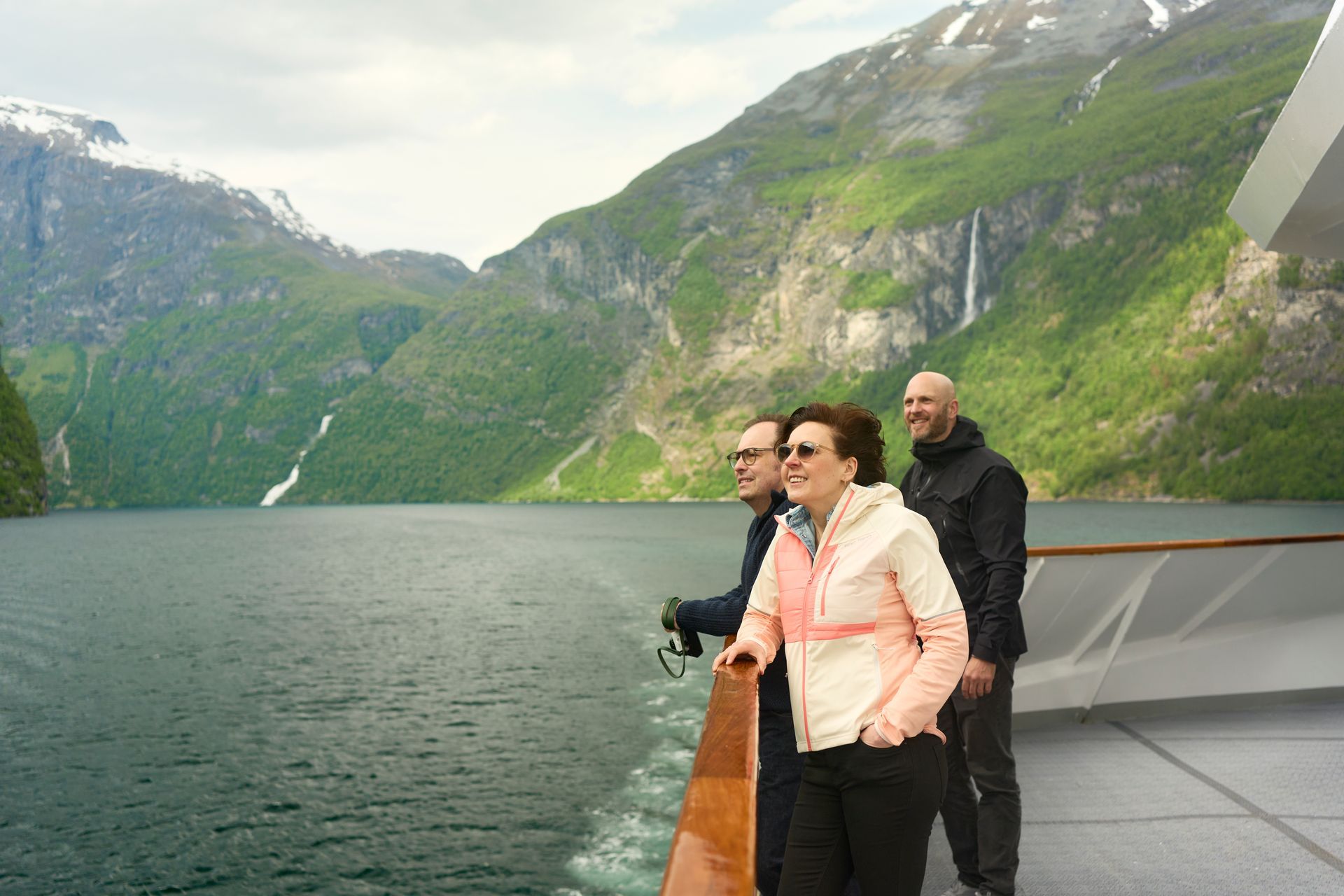
Hardangerfjord is known for its orchards, with blossom in spring and fruit at harvest time in autumn. Sognefjord stretches more than 200 kilometres inland, while Nordfjord takes you towards Olden and the glacier country. Lysefjord is the waterway beneath Pulpit Rock.
The route operates in spring and autumn, which suits the scenery particularly well. Spring brings melting snow, fuller waterfalls and blossom, while autumn brings changing colours, harvest time and fewer visitors.
The exact order of the fjords can change according to weather and light.
It also works very well as part of a wider Norway holiday, particularly if you want to add time in Bergen or combine the voyage with Oslo, the Bergen Railway or the Flåm Railway.
The important trade-off is that you stay in western Norway. You do not reach Lofoten, Tromsø, Alta, the North Cape or the Arctic Circle, and you do not experience the working coastal service of the Original Coastal Express.
My advice: choose the Inner Fjords Explorer if the fjords themselves are the main reason you want to visit Norway and you would rather spend longer exploring western Norway than cover the full coast. It is particularly well suited to a first trip if mountain scenery, waterfalls, villages and fjords matter more to you than Arctic Norway. I would not choose it if the North Cape, Lofoten or the working Coastal Express experience is high on your list.
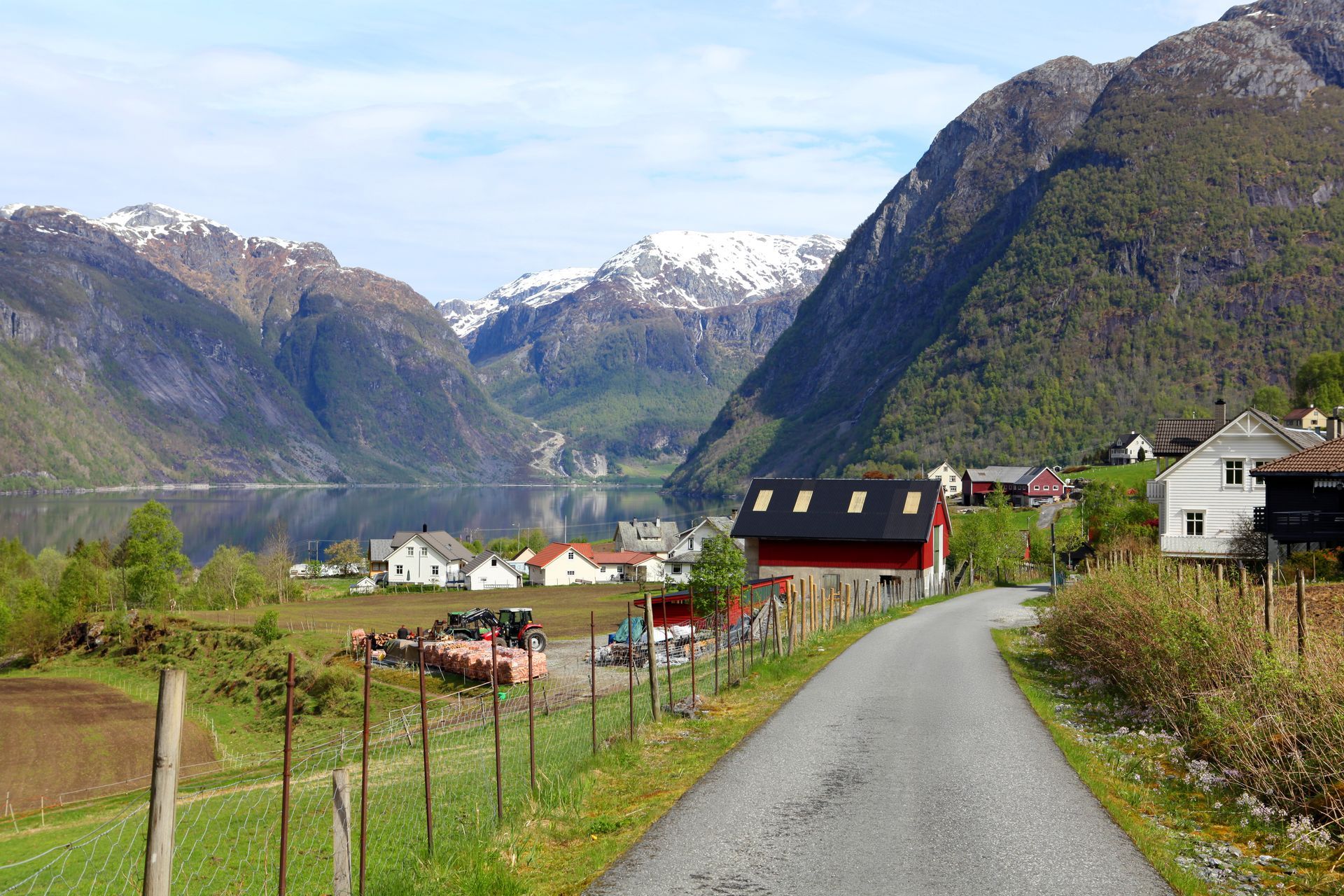
Rosendal, Norway.
Which Hurtigruten Route Should You Choose?
If you are still weighing up the options, this is the simplest way to narrow them down.
- Best first Hurtigruten trip: Original Coastal Express round trip
- Best shorter first trip: Original Coastal Express northbound
- Best all-round Northern Lights trip: Original Coastal Express
- Best for Northern Lights with longer port stays: North Cape Line
- Best shorter Northern Lights trip: Arctic Circle Explorer
- Best for longer port calls: North Cape Line
- Best shorter trip for Lofoten: Arctic Circle Explorer
- Best for the western fjords: Inner Fjords Explorer
- Best for Norway with a little Svalbard: Svalbard Line
- Best for Copenhagen and Arctic Norway: Arctic Line
- Best for included drinks: any Signature route
- Best for avoiding sea days: Original Coastal Express
- Best for a proper Svalbard expedition: none of these
For most first-time customers, I would start with the full Original Coastal Express, or the northbound journey if time is limited.
Unsure which route fits you best?
There are a lot of similarities between these voyages, but the differences in port times, daylight, sea days and what you miss can completely change which one is right for you.
Email me at mike@suitcasetravel.co.uk or call 01582 349480 and tell me what you most want to see and how long you have. I will give you an honest view of the routes I would consider and the ones I would rule out.
When Is the Best Time to Travel with Hurtigruten?
There is no single best time to travel with Hurtigruten.
The right season depends on what matters most to you. Spring is best for waterfalls, summer for long days and the Midnight Sun, autumn for colour and possible Northern Lights, and winter for snow and Arctic activities.
Spring
Spring is one of the best times for waterfalls.
As the snow melts, the water levels rise and the falls become much fuller. You still have snow on the mountain tops, but the days are getting longer and the lower slopes are starting to turn green.
It can also be a very good time for exploring ashore. The weather is often more comfortable for walking than in winter, and even a short stop can give you time to follow a local route beyond the port and see streams, waterfalls and smaller villages.
My advice: choose spring if you want snow-capped mountains and powerful waterfalls without the full cold and darkness of winter.

Lysefjord in afternoon lights.
Summer
Summer gives you the longest days and, above the Arctic Circle, the Midnight Sun.
That means you see far more of the coastline, including late in the evening and early in the morning, when the scenery would be in darkness at other times of year.
The landscape is also at its greenest, and routes such as the Svalbard Line operate during the summer months.
On relevant Original Coastal Express departures, summer is also the season for Geirangerfjord. At other times of year, the route may use Hjørundfjord instead.
Most people do not choose summer solely because of the Midnight Sun. They choose it for the warmer weather and the long days, which give them more time to enjoy the coast.
The second half of August can also be worth considering if you want summer conditions with fewer families travelling during the Scandinavian school holidays.
My advice: choose summer if daylight and scenery matter more to you than the Northern Lights.

Summer in Bergsetbreen Glacier in Jostedalen.
Autumn
Autumn is Penny’s preferred season.
You begin to get darker skies and a chance of seeing the Northern Lights, while the weather is usually less severe than in the middle of winter.
The coast also starts to change colour. The strongest autumn colours tend to be farther south, where there are more trees, while the softer light can create particularly good reflections on the fjords.
Penny also likes this time of year because there are usually fewer visitors ashore and prices can be lower than in spring and summer.
The compromise is that you may miss some winter-only activities, such as husky sledding and snowmobiling.
My advice: choose autumn if you want a balance of scenery, darker skies, fewer visitors and more manageable temperatures. It is probably the best all-round compromise.
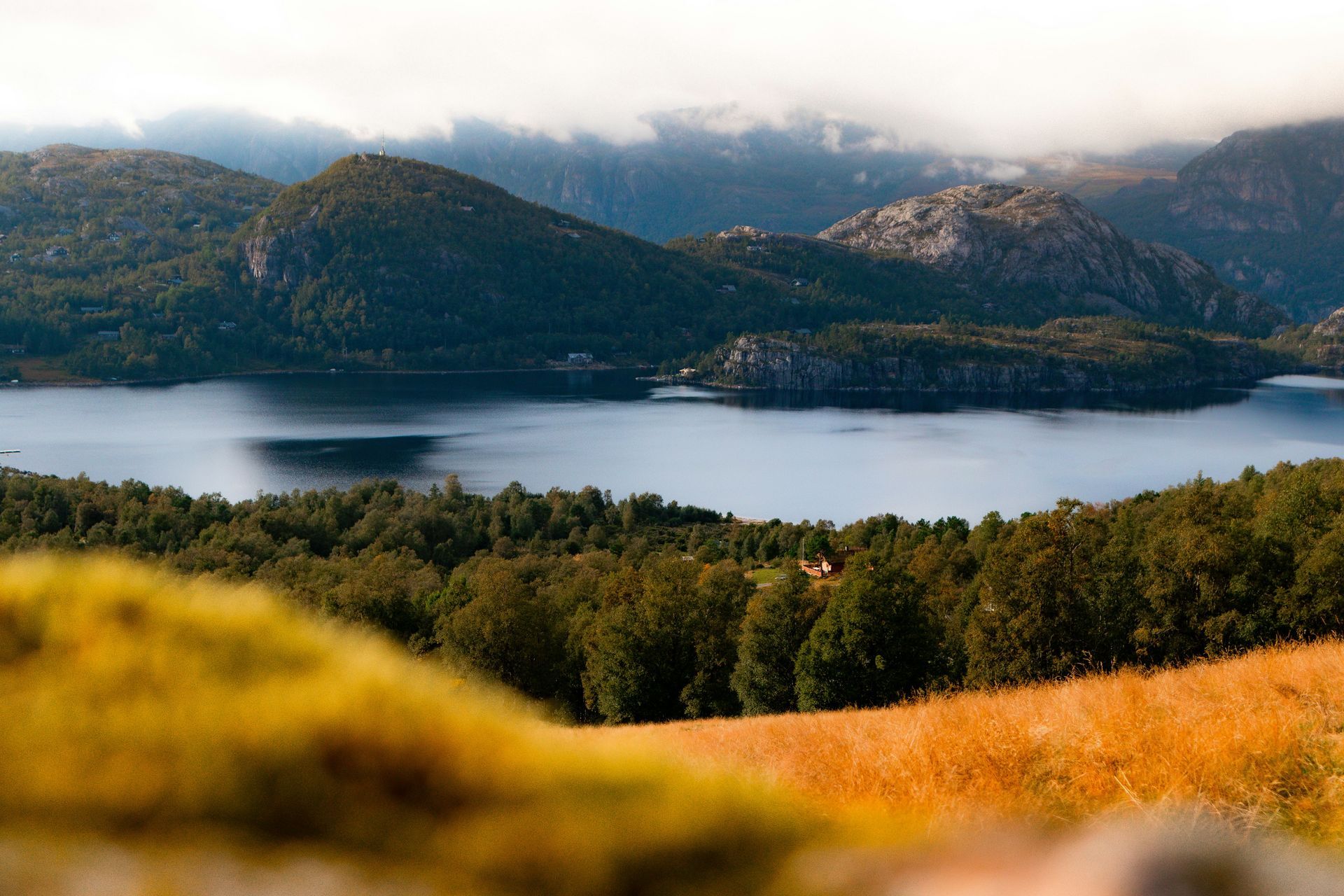
Autumn in Norway.
Winter
Winter gives you snow, dark skies and the widest range of Arctic activities.
Depending on the route and conditions, you may be able to go husky sledding, snowmobiling or snowshoeing, or visit the Igloo Hotel. It is also the season most people associate with the Northern Lights.
But do not think of winter only as a Northern Lights holiday.
For many people, the main attraction is seeing Norway covered in snow, with frozen landscapes, dark skies and a completely different feel from the greener months. The Northern Lights are an added highlight rather than the only reason to travel.
Winter does change the practical experience.
Daylight is short, walking conditions can be icy and some scenery will be seen in darkness. Weather is also more likely to affect roads, excursions and port calls.
That does not make winter a poor choice. It simply means you need to be comfortable with a less predictable trip.
My advice: choose winter if snow, Arctic activities and the Northern Lights are the main reasons for travelling. Do not choose it if long daylight and seeing every stretch of scenery matter more.

Northern Lights in Winter, Norway.
Seeing the Northern Lights with Hurtigruten
What Are the Northern Lights Really Like?
The honest answer is that they do not always look like the photographs to the naked eye.
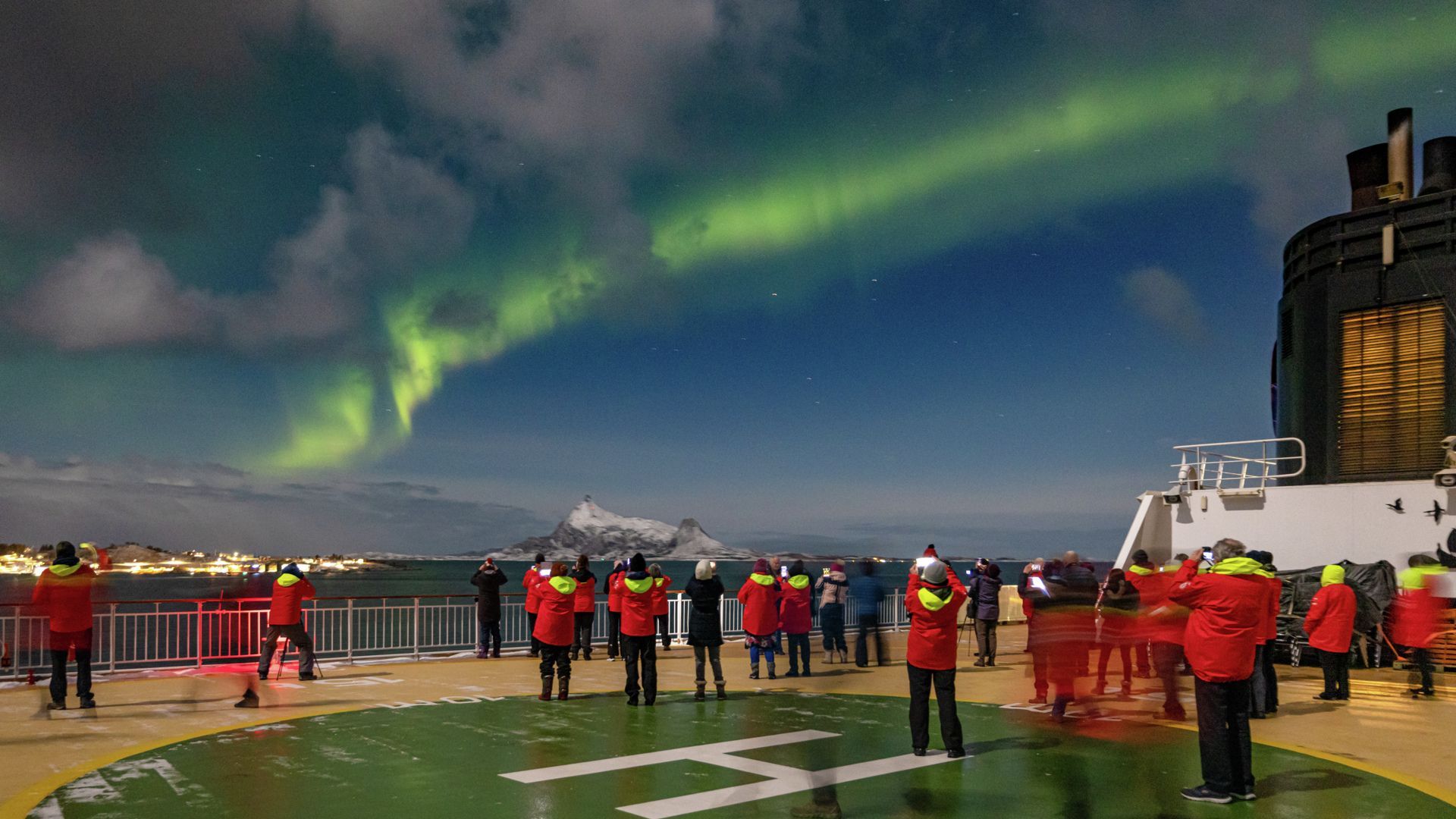
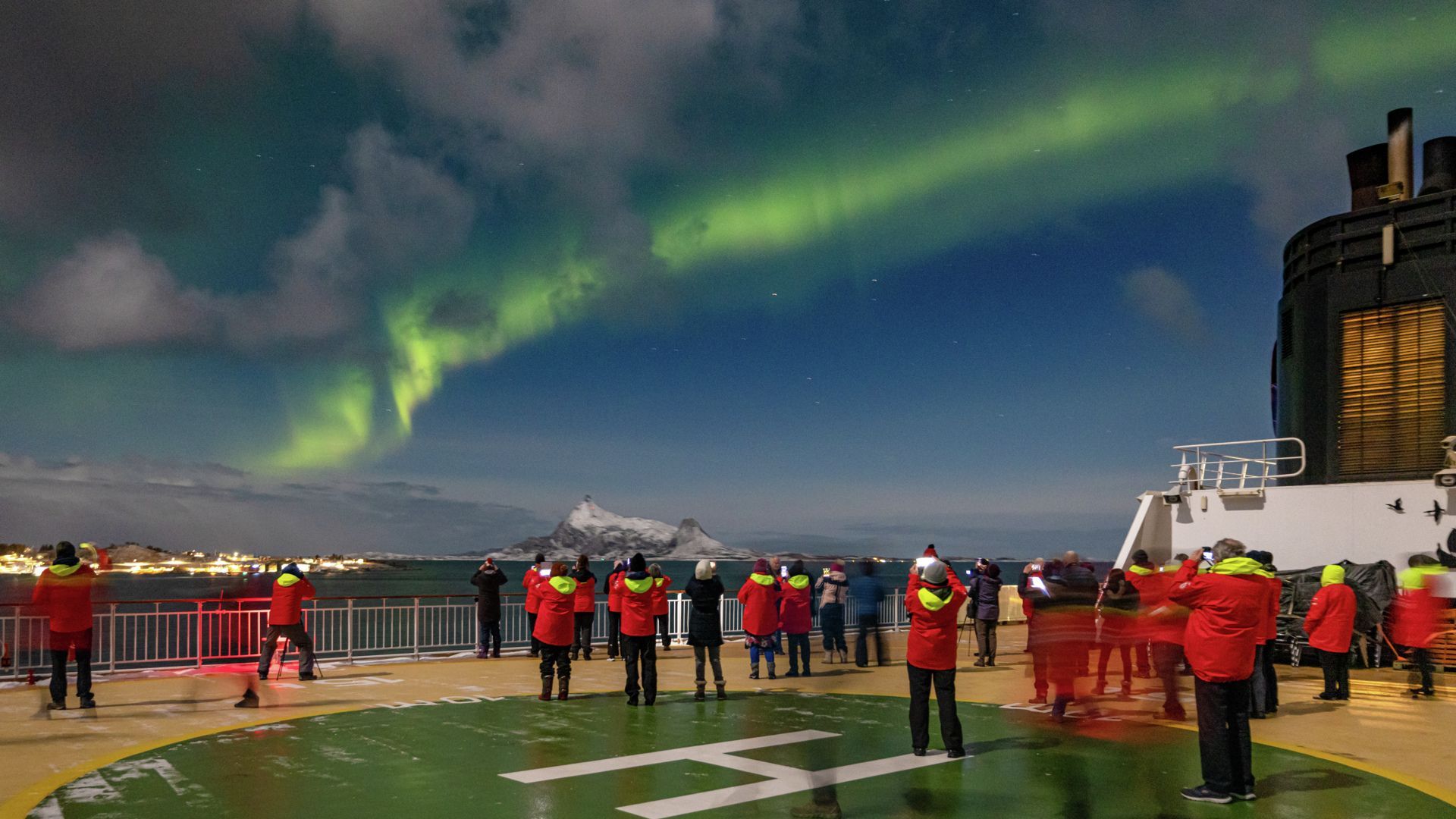
A weaker display can appear as a pale grey or white band across the sky, rather like a thin cloud. You may find yourself wondering whether you are really looking at the Northern Lights until you point your phone or camera towards them.
Cameras collect more light than our eyes, so they often pick up much stronger greens and purples. Editing can make those colours more vivid again. That is why some Northern Lights photographs create expectations that the real experience cannot always match.
Penny found that the first display could be difficult to identify with the naked eye, but much clearer through her camera. She also found other passengers helpful, sharing advice on the best phone settings to use.
That does not mean every display is faint.
When the activity is strong and the sky is clear, the lights can be vivid, move visibly across the sky and look every bit as impressive as you hoped. You simply cannot know in advance what strength of display you will get.
Why Hurtigruten gives you a good chance of seeing them
The advantage of a Hurtigruten voyage is that you are not relying on one evening or one organised excursion.
On a winter voyage, you may spend several nights travelling through areas where the Northern Lights regularly appear. The ship is also moving, so cloud in one location does not necessarily mean cloud throughout the journey.
When the crew sees the lights, an announcement can be made throughout the ship and directly into your cabin.
You can turn the cabin announcements off when you want to sleep, but leaving them on gives you the best chance of knowing when something is happening.
Be prepared for an announcement late at night. Seeing the lights may mean getting dressed quickly and going outside at one or two in the morning.
Hurtigruten’s Northern Lights Promise
Hurtigruten offers a Northern Lights Promise on qualifying voyages of 11 days or more departing during the aurora season, currently between 20 September and 31 March.
If the Northern Lights are not officially recorded by the ship’s officers and announced during your voyage, Hurtigruten offers a complimentary six or seven-day Original Coastal Express voyage during the following aurora season.
The promise currently applies to qualifying voyages on the Original Coastal Express and the North Cape Line. The replacement voyage is provided in an unspecified inside twin cabin on a full-board basis.
Flights, transfers, hotels, excursions and cabin upgrades are not included, and the offer must be claimed within 28 days of returning.
The terms can change, so we would always check that your chosen departure qualifies before you book.
It is also worth understanding what counts as a sighting. A brief appearance officially recorded and announced by the ship is enough, even if you personally miss it or decide not to go outside.
Our advice
Choose the voyage because you want to see Norway in winter, not because you expect one particular photograph.
I have found that even customers who initially book for the Northern Lights often come back talking just as much about the snowy landscapes, the ports, the people and the voyage itself.
The lights become one part of the holiday rather than the whole point of it.
That is the best way to approach them. Hope for a strong display, take the opportunities when they come, but choose a trip you would still enjoy if the sky remained quiet.
Planning a Northern Lights voyage?
I can help you compare the full Coastal Express, North Cape Line and shorter Arctic routes, including how much daylight you will have, how many nights you will spend in the north and whether your departure qualifies for Hurtigruten’s Northern Lights Promise.
Email me at mike@suitcasetravel.co.uk or call 01582 349480.
Hurtigruten Excursions: Which Are Worth Booking?
No. You do not need to book an excursion in every port, and I would not recommend trying to.
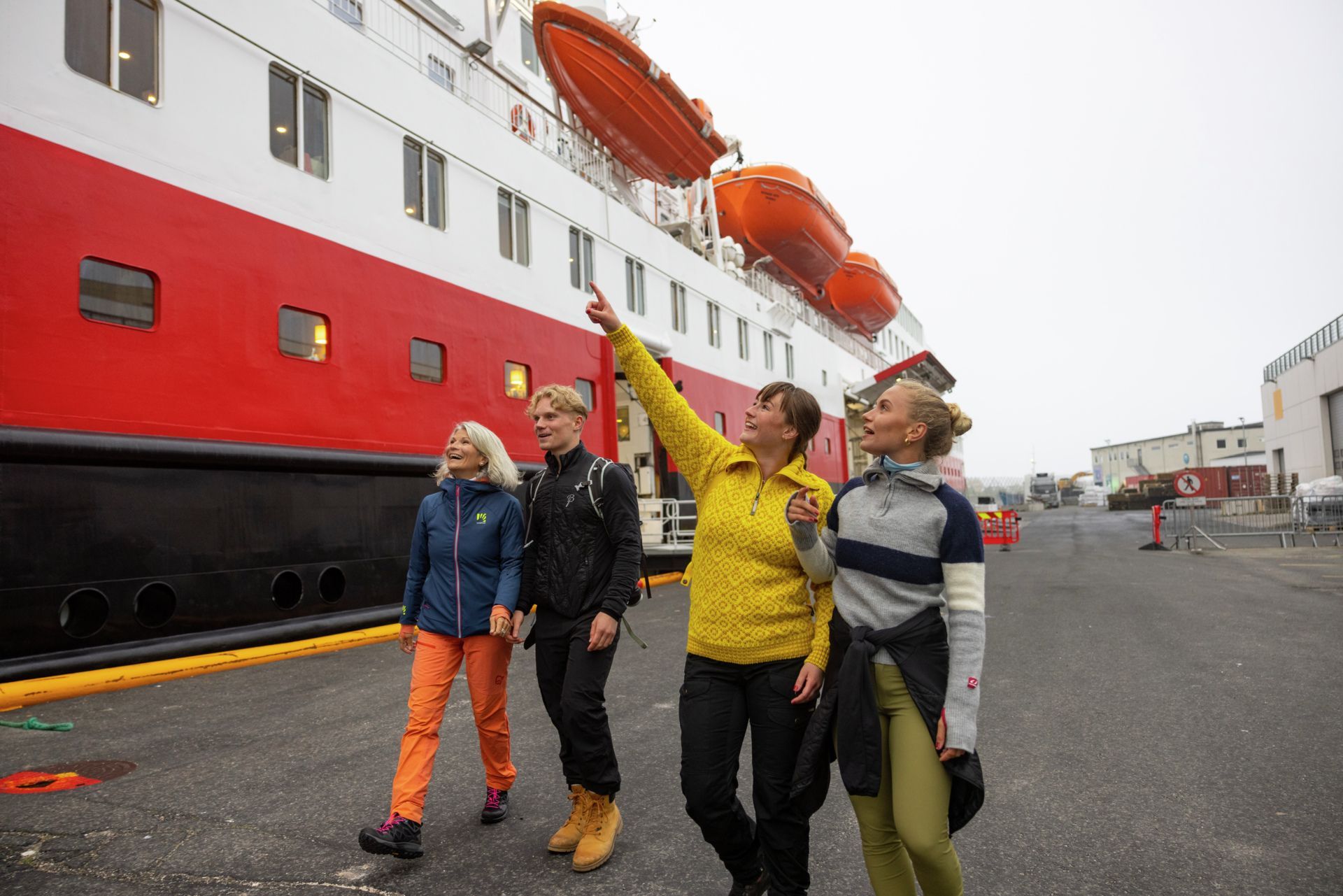
On the Original Coastal Express, that is particularly true because many of the port calls are quite short. A lot of the sightseeing happens from the ship itself, and in towns such as Ålesund, Trondheim, Tromsø and Svolvær, where the ships docks close to the centre, you can get off and explore independently without needing an organised tour.
The Coastal Experience Team provides simple local maps showing the main sights and suggested walking routes. You can also speak to them before arriving and ask what is realistic within the time available.
For that reason, I would rarely spend money on a guided walking tour of a town you can easily explore yourself.
Signature voyages work slightly differently because they generally spend longer in fewer ports. That gives you more time ashore and means excursions can become a bigger part of the holiday. You may be able to take an excursion and still have time to explore independently afterwards, which is much harder to do on some of the shorter Original Coastal Express stops.
Whichever type of voyage you choose, I think excursions become worthwhile when they take you somewhere that would be difficult, impractical or impossible to reach independently.
The North Cape is a good example. It is around 45 minutes to an hour by road from Honningsvåg, so it is not somewhere you can simply walk to from the ship.
On her Signature North Cape voyage, Penny was not initially convinced by the excursion, despite it being one of our most popular. She ended up loving it.
In fact, she thought the coach journey was one of the best parts because it gave her views across the fjords and mountains from above, rather than the usual view from the water.
Husky sledding, snowmobiling and RIB safaris are other good examples. These are experiences you can’t arrange independently and the transport and timings are organised around the ship.
Some Original Coastal Express excursions also collect you at one port and return you to the ship farther along the route. That allows you to travel inland without having to worry about catching the ship at the same place.
The excursions you most want to do should be booked before you travel.
Popular experiences, particularly husky sledding, can sell out. Others can usually be considered onboard once you have heard the briefing and seen the weather.
My advice
Spend your excursion budget on experiences that take you somewhere you cannot easily reach yourself.
On the Original Coastal Express, explore the towns independently where the timetable allows and use excursions for the North Cape, winter activities, wildlife trips or journeys inland.
On Signature voyages, look more closely at the excursion programme because the longer port stays give you more opportunity to make use of it.
That usually gives you a better holiday than booking an organised tour at every stop.
What Is Life Onboard Hurtigruten Really Like?
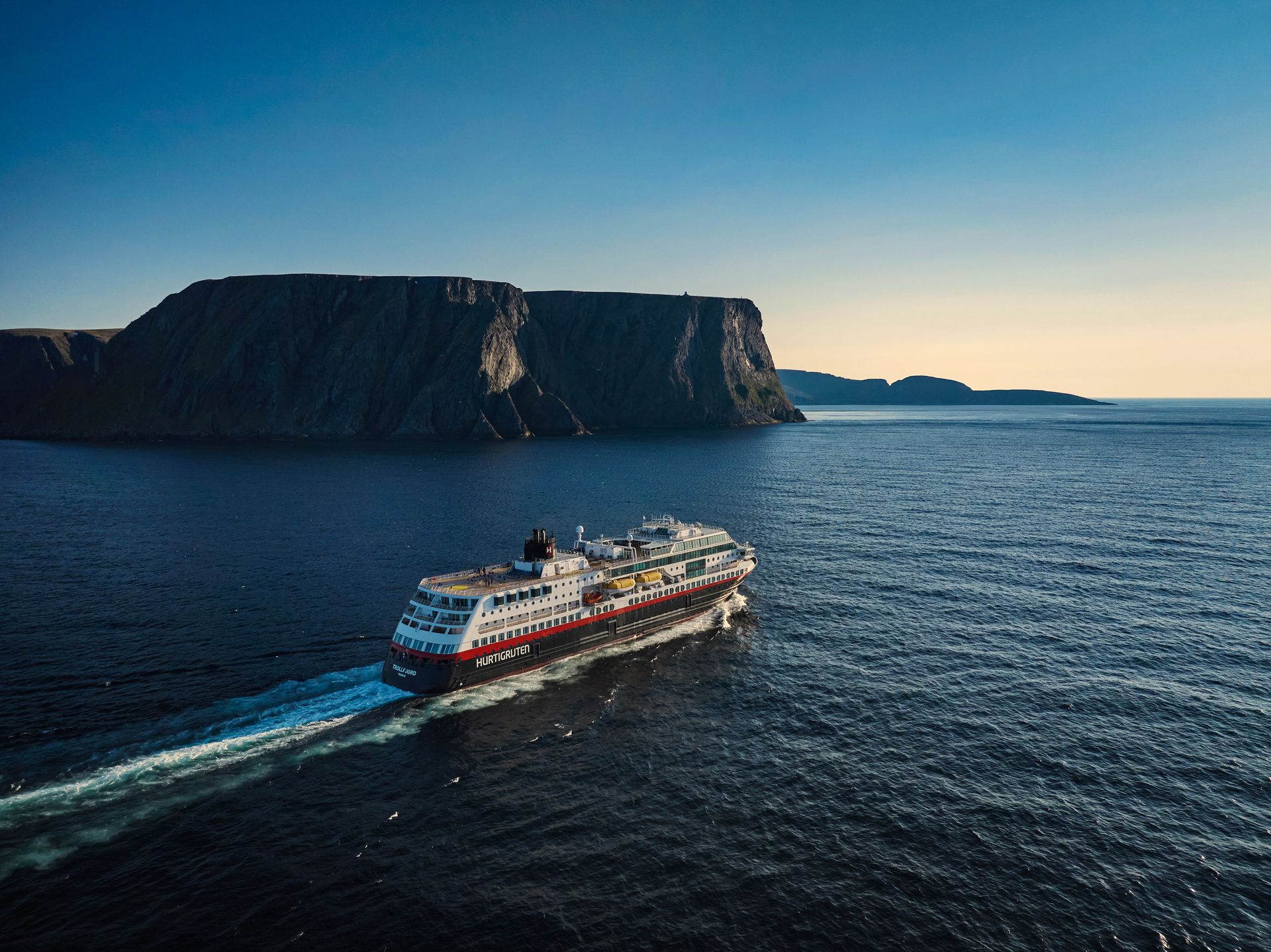
Life onboard is informal, quiet and centred on Norway.
There are no formal nights and no need to pack evening wear. On the Original Coastal Express, you will not feel out of place going into dinner in a jumper and walking shoes.
In winter, practical clothing makes even more sense because you may need to go outside quickly when the Northern Lights appear.
Food
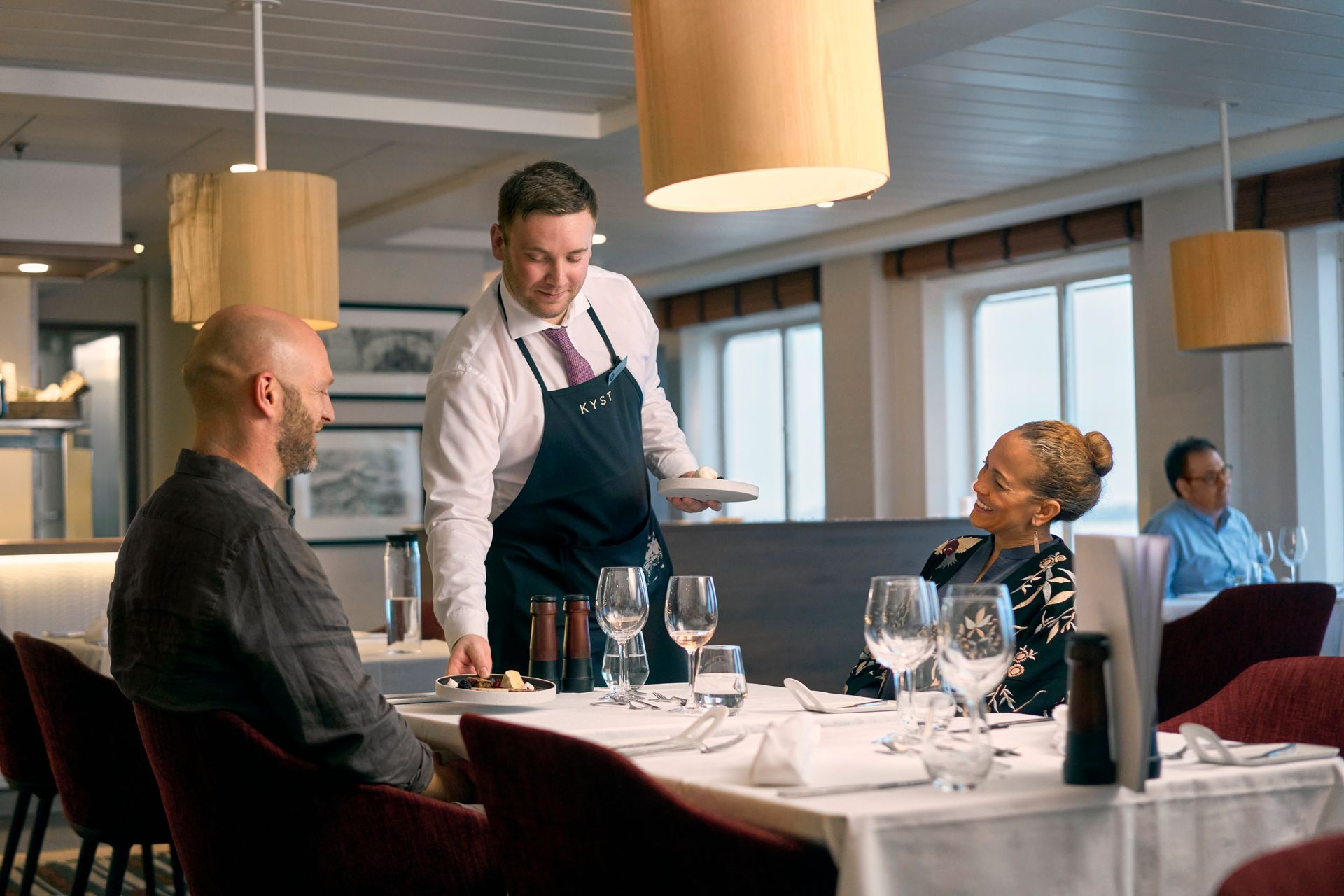
The food is Norwegian rather than designed around a long list of international cuisines.
Hurtigruten’s menus use local ingredients sourced along the coast, so the dishes change as the ship travels through different regions. You can expect plenty of fish and seafood, along with meat, vegetables, cheeses and other Norwegian produce.
On the Original Coastal Express, breakfast and lunch are generally served as buffets. Dinner is usually a set meal served at your table, although the exact arrangements can vary by ship and voyage.
Drinks are not generally included on the Original Coastal Express, although the exact inclusions depend on the fare you book. Norway is expensive, so the cost of drinks onboard is worth allowing for.
Signature is more inclusive. Meals and a selection of beers, wines, spirits and soft drinks are included, and the ships have more restaurant choice. Some additional dining and drink benefits are reserved for suite passengers.
My advice: the food is one of Hurtigruten’s strengths, but choose between Original and Signature based on the whole experience, not just the fact that drinks are included.

Entertainment
There is enough happening onboard, but Hurtigruten is not trying to entertain you every hour.
The Coastal Experience Team gives talks about the places you are visiting, Norwegian history, wildlife and life along the coast. There are also briefings about the following day, including port times, excursions and what you can explore independently.
Depending on the ship and voyage, you may also find food tastings, photography advice, films, quizzes or occasional live music.
What you will not find are large theatre productions, casinos or a packed evening programme.
My advice: do not choose Hurtigruten because you want conventional cruise entertainment. Choose it because you are happy for Norway to provide most of what you watch.
The social side
You can be as sociable or as private as you like.
There is no pressure to join organised activities or sit with the same people throughout the journey. You can attend talks, share tables and chat to people on excursions, or spend much of the voyage quietly watching the coast.
The atmosphere differs slightly between Original and Signature.
On the Original Coastal Express, local passengers regularly join and leave the ship as it moves along the coast. Some holidaymakers are also travelling for only one section, so the people onboard change more often.
That can make the experience feel less like travelling with one fixed cruise group. It also gives you opportunities to talk to Norwegians who are using the ship as part of an ordinary journey.
Signature passengers are more likely to be travelling for the full itinerary, so you tend to see the same people throughout the voyage. That can make it easier to get to know fellow passengers over several days.
Both attract an international mix, usually including British, Norwegian and other European travellers, as well as visitors from farther afield.
It works particularly well for solo travellers. The ships are small enough for conversations to happen naturally, but you are not forced into organised socialising.
Cabins and ships
This is the part people often overlook.
The Original Coastal Express is operated by several ships built at different times. They follow the same route, but the cabins, lounges and facilities are not identical.
Some have more modern interiors, better leisure facilities and more places to sit with a view. Others offer a simpler and more traditional experience.
There is also one older ship that is sometimes considerably cheaper than the alternatives. It appeals to people who value the history and older style of sailing, but it lacks some of the facilities and modern stabilisation found on newer ships.
Unless you are a confident sailor and specifically want that experience, I would normally avoid it.
Cabin choice matters too.
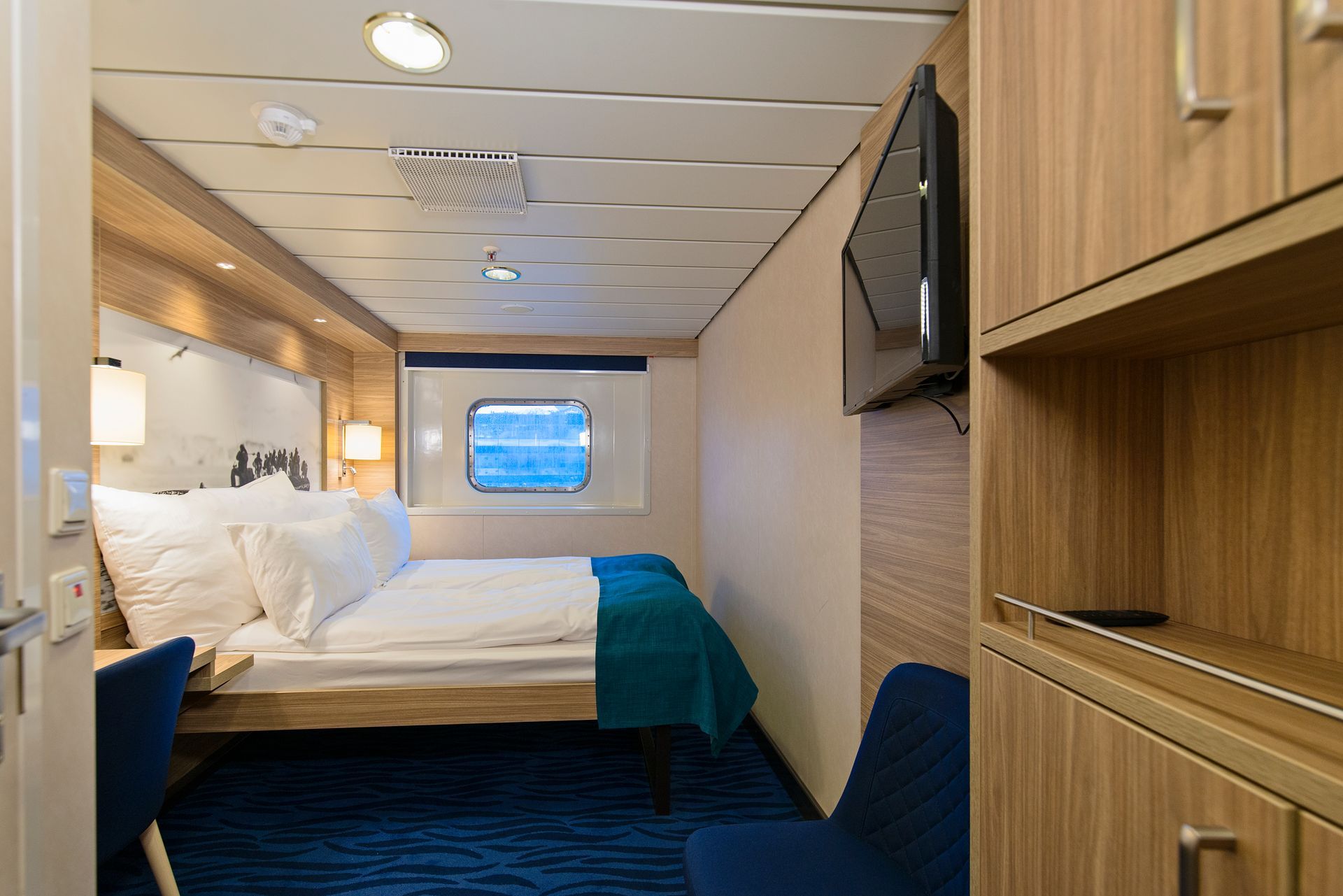
Hurtigruten cabins are comfortable and practical rather than large. The size, bed arrangement, window and position can vary considerably, even within the same broad cabin category.
Some outside cabins have portholes rather than large windows. Others look onto a promenade deck, which means passengers may walk past the window. Cabins near lifts, machinery or working areas of the ship may also experience more noise.
That does not mean you need the most expensive cabin. Most people spend relatively little time in it. But it does mean you should understand exactly what you are booking.
Signature ships generally have more lounge and restaurant space and feel more arranged around people spending longer onboard. The Original ships feel more like comfortable working coastal vessels, which is part of their appeal.
My advice
Do not choose your voyage solely by the route and date.
Check which ship is operating, what facilities it has and exactly where your cabin is before paying a deposit.
Two customers can book the same route and have quite different experiences because they chose different ships or cabins. This is one of the areas where getting proper advice before booking genuinely matters.
Let Me Help You Choose the Right Hurtigruten Voyage
Choosing a Hurtigruten voyage has become much more complicated than it used to be.
There are now several different routes, and many can also be travelled northbound, southbound or as a round trip. Two voyages can look very similar until you compare the stops, timings and daylight properly.
You may have one place you particularly want to see, only to discover that your chosen voyage spends very little time there, arrives late in the evening or passes it through it at night.
You can also end up paying more than you need to. A Signature voyage may sound like the better option because it includes more, when the Original Coastal Express would actually suit you better.
Then there is the rest of the trip. Hurtigruten combines brilliantly with journeys such as the Bergen Railway, the Flåm Railway and extra time elsewhere in Norway, but coordinating the flights, trains, hotels and cruise timings yourself can quickly become complicated.
Our aim is not simply to book a Hurtigruten cruise as cheaply as possible. It is to find the right voyage for what you want to experience, at a price that makes sense for your budget.
That is where Penny and I can help.
Advice based on first-hand experience
I have sailed the Original Coastal Express, while Penny has travelled on the Signature North Cape Line.
So when you ask what the ships are really like, what the highlights are, how much time you actually get ashore or whether an excursion is worth paying for, our advice is often based on having done it ourselves.
But our experience goes much further than our own voyages.
Between us, we have helped more than 1,000 customers plan Norwegian coastal cruise holidays. And when they come home, they tell us what they loved, which cabins worked well, which excursions were worth doing and what surprised them.
That gives us a much broader picture than our own trips alone ever could.
We help you narrow the choices down
Tell me what you most want to see, how long you have, when you want to travel and how you normally like to spend your holidays.
I will help you work out which routes genuinely fit those priorities, which ones I would rule out and why.
For one person, that may mean the full Original Coastal Express. For another, the seven-day northbound voyage may give them everything they really want without paying for another five days onboard.
Someone else may genuinely benefit from a Signature voyage because the longer port stays, the slower pace and extra inclusions matter to them.
We may even tell you to spend less on your cabin
Cabin choice is another area where it is easy to spend more than you need to.
We can explain exactly what you are getting for the extra money, including the window, position, bed arrangement and location on the ship.
And quite often, we recommend that customers downgrade from the cabin they originally thought they wanted.
If most of your time is going to be spent in the lounges, out on deck or ashore, paying substantially more for a higher-grade cabin may not improve the holiday enough to justify the cost.
For some customers, the extra space, view or location genuinely will matter. The important thing is knowing which camp you fall into before you pay the deposit.
More than just the cruise
For many customers, Hurtigruten is only one part of the holiday.
You may want to travel from Oslo to Bergen by train, spend a night in Flåm, add the Flåm Railway, stay longer in Tromsø or include a few nights elsewhere in Norway.
We can design the whole trip rather than leaving you to piece the cruise, flights, trains and hotels together yourself.
That means checking the timings work, allowing sensible connections and building the rest of the holiday around the voyage you have chosen.
You end up with one joined-up trip rather than a collection of separate bookings you have had to make fit together.
Independent advice and financial protection
Suitcase Travel is an independent family business, so my recommendation is based on what I believe will suit you rather than on pushing you towards a particular route or departure.
Booking through us should not cost you more than booking direct, but you also have someone to help you choose the holiday and look after the arrangements.
We are aligned with the Hays Travel Group, which gives us strong financial protection through ABTA and ATOL and the commercial backing of one of the UK's largest travel groups.
If a flight is cancelled, a hotel needs changing or part of the itinerary is disrupted, you are not left trying to work out which supplier to contact and how the rest of the trip now fits together.
You call us, and we help sort it out.
What our customers say about us
I was able to chat through our trip for nearly an hour with Penny who answered all of our questions with no pressure to book . She had been on this holiday and gave a personal perspective. We had lots of options as to what kind of Norwegian trip we could take and she was able to help us choose which one was right for us based on our needs. We returned from our voyage north yesterday, it exceeded our expectations.
—Joanne A.
We had a rough plan to take the post boat up the Norwegian coast, and normally book things independently. However, we saw a review of Suitcase Travel and one of their blogs which showed that they knew what they were doing. On contacting them we explored different options and refined our ideas, so that the trip we ended up booking exceeded our expectations.
—Sandra Reid
Suitcase Travel arranged a great trip to Norway for me and my friends. For our first coastal cruise, Mike was able to articulate what might be important, interesting and essential for us to think about. The Suitcase team were knowledgeable, well organised, friendly and gave us exactly what we needed. I would definitely recommend them and use them again myself.
—Patsy
See all of our TrustPilot reviews
Email me at mike@suitcasetravel.co.uk, complete the form below and I will get in touch, or call me on 01582 349480.
FAQs
What is the difference between Hurtigruten Original and Signature?
The Original Coastal Express is still a working transport service. It carries local passengers, cars and freight, calls at 34 ports and includes a mixture of short operational stops and longer stays.
Signature is more cruise-like. It visits fewer places, usually stays longer in the main ports and includes drinks and more restaurant choice.
I would usually recommend Original for the fullest sense of travelling along the Norwegian coast. Signature is better for people who value longer stays, a more inclusive price and more time onboard.
Which Hurtigruten route is best for a first trip?
For the most complete first experience, I would choose the full 12-day Original Coastal Express from Bergen to Kirkenes and back.
It gives you the widest view of the coast and lets you see in daylight some places that were passed at night in the other direction.
With less time, I would usually recommend the seven-day northbound Coastal Express from Bergen to Kirkenes.
Is the northbound or southbound Coastal Express better?
For most first-time travellers, I prefer the northbound journey.
It gives you a broader mix of western fjords, Ålesund, Trondheim, the Helgeland coast, Lofoten, Tromsø and the far north before ending in Kirkenes.
The southbound route is particularly strong for Lofoten, Trollfjord when conditions allow, and the Helgeland coast. I would normally choose it when those areas, the dates or a wider northern Norway itinerary make it the better fit.
Is the full 12-day Coastal Express worth it?
Yes, particularly if this may be your only Hurtigruten voyage and you have the time.
The return journey does not feel like simply repeating the first half. The timetable changes by direction, so places passed at night on one leg may be seen in daylight on the other. The southbound journey also brings different parts of Lofoten and the Helgeland coast to the fore.
The main question is whether you will enjoy 12 days onboard, even with frequent stops. Some people will. Others will be happier with the northbound section.
Which Hurtigruten cruise is best for Lofoten?
For a shorter trip focused on Arctic Norway, I would choose the Arctic Circle Explorer. It includes Svolvær, Raftsundet and Stokmarknes within an eight-day round trip from Tromsø.
The Original Coastal Express also includes Lofoten and gives you the working coastal experience. The southbound route can be particularly strong for the scenery, while the northbound journey gives you a broader first trip.
Which route is best for the Norwegian fjords?
Choose the Inner Fjords Explorer when the western fjords are the main reason for travelling.
It is built around areas such as Hardangerfjord, Sognefjord, Nordfjord and Lysefjord, with longer and more focused time in western Norway.
The Original Coastal Express includes fjord scenery too, but as one part of a much longer journey along the coast.
Which Hurtigruten cruise is best for the Northern Lights?
The Original Coastal Express is my best all-round choice because it gives you repeated opportunities over several nights while also filling the days with ports and coastal scenery.
The North Cape Line is better when you want longer port stays and a more inclusive Signature experience.
The Arctic Circle Explorer is a strong shorter option because the whole trip is concentrated in northern Norway.
Whichever route you choose, book it for Norway as a whole. The Northern Lights can never be guaranteed, and weaker displays may look much less colourful to the eye than they do through a camera.
How much time does the Svalbard Line spend in Svalbard?
Less than the name may lead you to expect.
The Svalbard Line is mainly a Norwegian coastal cruise with a short visit to Svalbard, usually centred on Longyearbyen and, on the relevant itinerary, Ny-Ålesund.
It is a good way to combine Norway with a brief introduction to Svalbard. It is not a substitute for a dedicated expedition cruise around the archipelago.
Are drinks included on Hurtigruten?
On the Original Coastal Express, drinks are generally not included, although the exact benefits depend on the fare you book.
Signature voyages include a selection of wines, beers, spirits and soft drinks with the package, as well as more restaurant choice.
The higher Signature price partly reflects those inclusions, so it is worth comparing the total cost rather than looking only at the headline fare.
Do I need to book excursions?
No. Many ports can be explored independently, and the onboard team provides maps and advice about what is realistic within the time available.
I would spend money on excursions that would be things that you can’t organise on your own. The North Cape, husky sledding, snowmobiling and RIB safaris are good examples.
Book any must-do excursion early, particularly popular winter activities. You can leave some of the simpler options until you are onboard.
Is Hurtigruten suitable if I do not normally like cruises?
It may be, especially when the things you dislike are formal evenings, large ships, casinos, theatre shows and crowded pool decks.
Hurtigruten is informal, and the coast is the main attraction. The ships are much smaller than conventional cruise ships, and on the Original service you are also travelling alongside local passengers and freight.
You still spend a lot of time onboard, though. It will not suit someone who dislikes being at sea or needs a full programme of entertainment.
Which Hurtigruten ship should I choose?
Do not choose only by route and price.
The Original fleet includes ships built at different times, with differences in cabins, lounges, facilities and how they handle at sea. There is also an older ship that I would not normally recommend.
Cabin location matters too. Check the window, bed arrangement, nearby machinery, promenade decks and distance from the main public areas before paying a deposit.
The best ship is the one that gives you the right balance of route, date, facilities, cabin and price.
You Do Not Have to Work All This Out on Your Own
You may still be comparing routes, directions, cabins or ways to combine Hurtigruten with the rest of Norway.
Or you may already think you know which voyage is right for you and simply want someone who knows Hurtigruten to sense-check the decision.
Tell me what matters most to you and what you are currently considering. I’ll help you narrow down the choices, explain any differences that are easy to miss and tell you whether I think your preferred option really does fit what you want from the holiday.
Email me at mike@suitcasetravel.co.uk, complete the form below and I will get in touch, or call me on 01582 349480.
Contact Us